- Rating
- 10/10
- Read
- October 2026
- Why I read it
- What I took from it
- My favorite idea
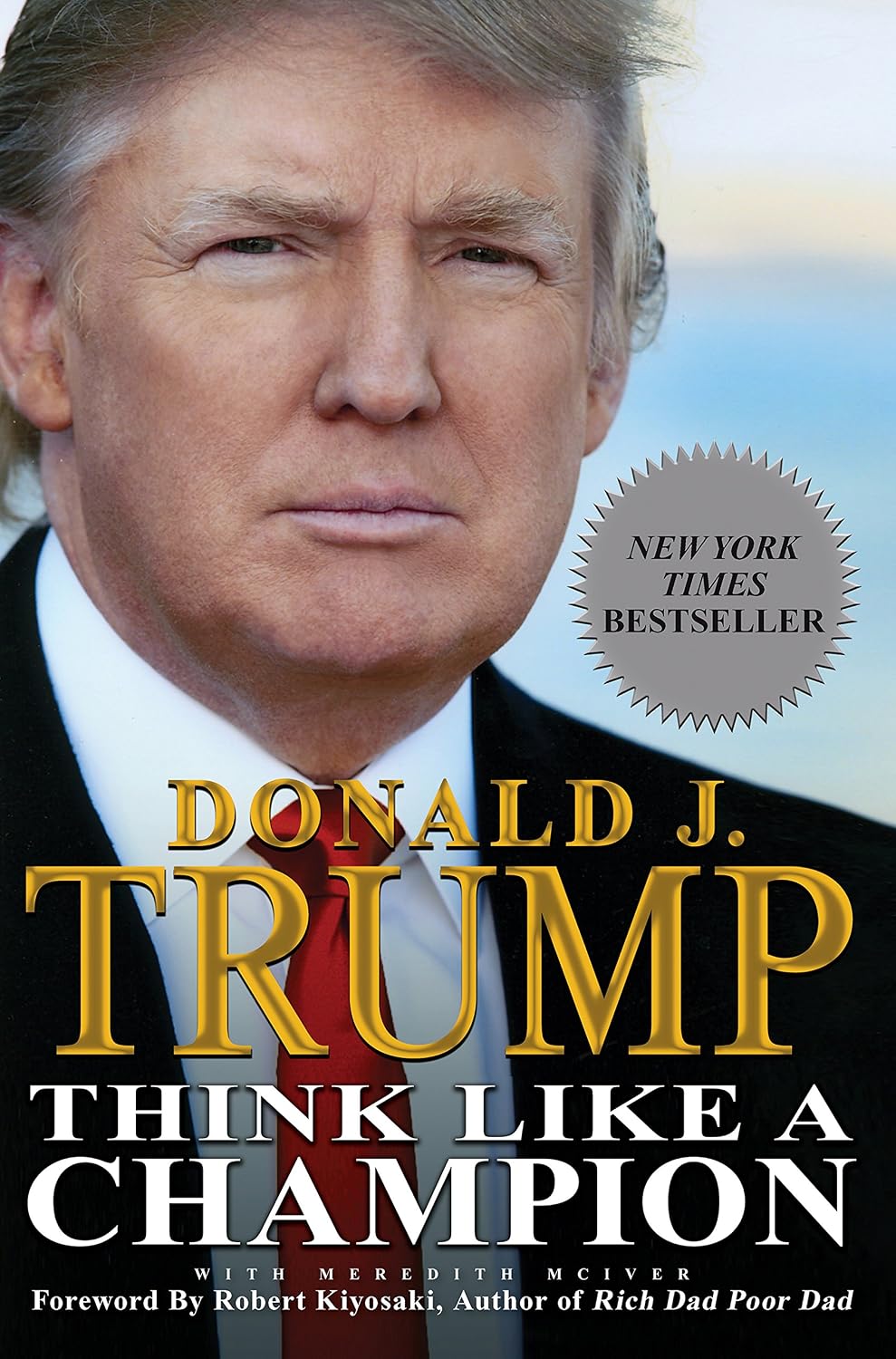
Published in 2009 and written with Meredith McIver, this is a collection of short essays rather than one long story, which is what the subtitle means by “an informal education.” Each chapter is a few pages on a single idea from Donald Trump’s career: staying focused, working hard, learning constantly, negotiating, thinking big, and keeping momentum when things go wrong. It’s easy to pick up and read a chapter at a time. For more from him, see my notes on Trump: The Art of the Deal and Trump Never Give Up.
Highlights
We don’t really create, but we assemble what has been created for us. Be a great assembler—no matter what your interests may be—and you’ll be on your way to inventiveness.
It’s important to remain open to new ideas and new information. Being a know-it-all is like shutting the door to great
Once in awhile—or often is even better—ask yourself this question: What do I need to know more about?
I make an effort to read newspapers with ample international coverage and the Financial Times on a daily basis because it’s important to my business to know what’s going on worldwide.
Socrates is famed for having said, “There is only one thing I know, and that is I know nothing.”
Ever notice how your senses are heightened when you are in challenging situations? It’s like having an adrenalin rush that gives you extra energy. If you see every day as a challenge, you’d be surprised how efficient you can become and how much can be accomplished.
As Napoleon said, “A leader has the right to be beaten, but never the right to be surprised.”
When the achiever achieves, it’s not a plateau, it’s a beginning. Achievers move forward at all times—they have anticipation for their next deal and have another goal immediately lined up.
Your higher self is in direct opposition to your comfort zone.
Experience is one thing you can’t get for nothing. —OSCAR WILDE
Another way to gain wisdom is to read about the greats in history and those in your specific field of interest. I learned a great deal by reading about Winston Churchill, Abraham Lincoln, and people who had been in pivotal places in world history.
I remember realizing back in school that two things in particular seemed to shape the world as I knew it then—war and nature. Nature is a powerful force and so is war. It changes the landscape of countries and cultures, and nature can just plain change the landscape. So I spent time studying wars and their impact on where we are today in civilization. It's worth spending some time to know how and why we are where we are today. One book that I would suggest to you, because it is valuable for business and managerial strategies, is The Art of War by Sun Tzu.
The More You Learn, the More You Realize What You Don’t Know
We should be aware of our culture and other cultures, our history and their history, and we should not live in what has been termed “a cultural vacuum.” Someone once said that not knowing history was like being a leaf that didn’t know it was part of a tree. That’s an interesting visual and it applies to many people. We are individually responsible for our education, and that applies whether you’re in school or not.
It’s good to start each day by saying to yourself, “What can I learn today that I didn’t know before?”
Take my advice and never be a know-it-all. First of all, it’s impossible to know everything, and second of all, it’s just no fun—for you or anyone else. And third, you will be missing out on some great adventures. So remember to think big by expanding your horizons at the same time you’re expanding your net worth. That’s what significant success is about.
Ordinary wouldn’t be enough for someone who has the mindset of a champion.
Champions think big. Champions work in a big-time way. Champions are focused. Champions are disciplined. Come to think of it, champions think like champions. As Jack Dempsey said, “A champion is someone who gets up when he can’t.”
I have a box at the U.S. Open every year because I love to watch those champions go at it. You can learn a lot from watching the experts, whether you’re interested in sports, the arts, or whatever. One thing they all have in common is the same mindset: They want to win, they want to be the best. Not the runner-up, but the best.
Champions go the extra mile. We all know when we’ve done just enough and when we’ve really exerted ourselves. Make an effort to exert yourself—every day.
Alexander Graham Bell said something that I always remember: “Concentrate all your thoughts upon the work at hand. The sun’s rays do not burn until brought to a focus.”
He didn’t need to impress anyone—except himself. That’s a good way to be, whether you’re a businessperson or a musician.
Compete with yourself to be the best you can be.
Anyone in business knows that negotiating and making deals requires a lot of background work. People don’t see me doing that part, but it doesn’t mean I don’t do it.
I didn’t have to use a rare marble when I built Trump Tower, but it would make a difference and I knew it. So when I say I view my work as an art form, you can bet that I’m as meticulous as any artist is about their materials and the desired result. If you will do the same, I think you’ll surprise yourself at how high your standards will become.
I don’t think much of a man who is not wiser today than he was yesterday. —ABRAHAM LINCOLN
Experience teaches only the teachable. —ALDOUS HUXLEY
I’ve mentioned before the importance of keeping up with global events on a daily basis if you are planning to get anywhere in this world.
As I write this, I remind myself that if you are reading it, you are most likely someone intent on improving your intelligence quota and someone who is already motivated. So I want you to ask yourself: What is it that you are aiming for? What precisely is your motivation? What’s the point of building a bridge if you’re not sure you want to get to other side, or if you don’t know what you’ll do once you get there? A bridge must serve a specific purpose, and your goals have to be just that specific.
Visualization is a powerful tool for bringing your intentions into focus.
Take a few hours a week to review the classics in literature or history or something outside of your usual range of interests. Limiting yourself is not the best choice. Many topics come up in the course of a business discussion or interview, and while we can’t know everything, we should know as much as we can.
Creative thinking is a must these days.
Fear defeats more people than any other one thing in the world. —RALPH WALDO EMERSON
To ask the right question is already half the solution of a problem. —CARL JUNG
If you label something as a fear, then it creates fear when sometimes it’s not a fear but a concern.
An antidote to fear is as simple as problem solving. Whether you have investing, estate planning, or running a business on your mind, or all of those things, they can be broken down into units of thought and dealt with in an orderly manner. It’s a bit like a jigsaw puzzle—you need to find the right place for each piece of the puzzle until the whole is apparent.
When I began to construct Trump Tower, for example, I had several things in mind that I knew I wanted. I wanted a certain kind of marble called Breccia Perniche, which was expensive, beautiful, and rare. It was also irregular and had white spots and white veins, which bothered me, so I went to the quarry itself and marked off the best slabs with black tape. Action turned this concern into a problem solved. I got exactly the marble pieces I wanted, and sitting around worrying about whether those pieces would be right or wrong was getting me nowhere. As a result of deciding to go to the quarry myself, the pieces of this puzzle fell into place and the finished product was perfect.
Fear has a way of making things bigger than they are. There’s an old German proverb to the effect that “fear makes the wolf bigger than he is,” and that is true.
This might sound simplistic, but I’m a firm believer in visualization, and it worked for me.
A lot of people think I’m a natural at business. In some ways they might be right, but it’s also an acquired skill that takes discipline and focus, just as being an athlete or a musician takes perseverance and years of training.
I’ve always liked Andy Warhol’s statement that, “making money is art and working is art and good business is the best art.” I agree.
When I was in school, I always did more than was expected and studied on my own in addition to what was required. I’ve noticed that a lot of very successful people have done the same thing, no matter what their respective fields might be.
Winston Churchill was known for being a great orator, and I remember thinking he must have been born with this talent until I read about him and discovered he spent a great deal of time developing this skill. It wasn’t just a natural ability—he worked at it constantly. His talent was the result of deliberate and focused work.
The natural ability I may have as a businessman is being able to see the big picture while I’m taking care of a lot of details.
Business is about creativity. That’s where the art part comes in.
Success is often a matter of patience, and patience can be developed if you don’t have it naturally.
Whatever you’re doing, keep it short, fast, and direct. It’s also more polite. Most people don’t have time to waste. I mention that because sometimes we have to give ourselves deadlines. Practice giving your presentation in under five minutes. Practice giving your introduction in less than three minutes. You will discover that you can be an effective editor by cutting out everything that isn’t absolutely necessary.
Simple as it sounds, there is great wisdom in the short, fast, and direct route. Knowing where you’re going in your conversation and demonstrating to others you know where you’re going by being concise, is a big step toward leadership and respect.
When I think of work, I often see it as problem solving.
Many things become easier with practice and experience, and momentum is one of them. You can take advantage of this great energy source just by being aware that it exists. It’s like swimming with the current versus being dragged down and out by a riptide. Find your own current and then go with it! Don’t allow for distractions. Do everything you can to maintain your energy flow.
There was a hugely successful real estate developer that I admired very much, and then he went into a decline. We saw each other at a party, and I pointedly asked him what caused this to happen. He said, “Donald, I lost my momentum, and I couldn’t get it back.” When this guy fell, he fell hard. I learned a great lesson from him that night, so much so that I devoted a lot of time to studying and applying the power of momentum to my own life and business. I didn’t ever want that to happen to me, and I repeat this story for a reason.
Having an ego and acknowledging it is a healthy choice. Our ego is the center of our consciousness and gives us a sense of purpose. People with no ego will have very little life force, and
It’s very important to be your own best friend. As Mark Twain put it, be comfortable with your own approval. A
Wealth is the product of man’s capacity to think. —AYN RAND
Equities, emerging markets, asset management, commodities, mutual funds, hedge funds, annuities, stocks, bonds, and mortgages should be common knowledge by the time you are in high school.
My advice to you is to take as many finance classes as you can, no matter what your line of work is and/or your focus of study might be. If you’re not good at economics or statistics, all the more reason to take those classes and pay attention. You can start by clicking onto the Finance page on Yahoo! when you go onto your computer every day. Check out the markets a few times a day and see how the dollar is doing against the Euro and Yen. Learn to read the charts and the trends. Read the pertinent articles.
My first thought was how important planning ahead is to success, and how equally important it is to remain flexible with those plans.
When these things happen to you, whether they be big or small events, remember that your perception of their magnitude will play a big part in what you can reap from them.
When I hear people say things like, “It’s impossible to do more!” I always smile to myself and think, “I’ve just started!”—and it’s just a great way to feel.
The best achievers are those who are self-motivated, who are naturally curious, and who don’t need to be told what to do next.
I received a letter from my kindergarten teacher, and she mentioned that what she remembers most clearly about me is that I never stopped asking questions.
Learning without thought is labor lost. —CONFUCIUS
Michelangelo said something worth thinking about: “If people only knew how hard I work to gain my mastery, it wouldn’t seem
There was a guy who was a very successful businessman, but his first passion in life was the piano. He was very dedicated and disciplined, and he achieved a certain virtuosity, but he finally realized he would never be one of the greats. In other words, he knew he would never be a Horowitz or a Gould, and he had very high standards for himself. So he quit the piano and applied himself to business and he became enormously successful. He just knew he should move on, and he did. He remained a musician in his private life and maintained a healthy balance for himself with his interests. He said if he’d remained a pianist, he would have been frustrated.
Learn to scrutinize yourself and your capabilities, and find the time for some thought-provoking thinking. As Confucius said, “Learning without thought is labor lost.”
It helps to know what other people have faced in accomplishing their goals.
One of the most important things I’ve learned is to watch what people do versus listening to what they say.
It’s not that I’m so smart, it’s just that I stay with problems longer. —ALBERT EINSTEIN
Winners See Problems as Just Another Way to Prove Themselves
Problems are a mind exercise. Problems can be opportunities. If you put different names on different things, it’s surprising how much that can affect your approach to them.
You can’t prove your merit on quiet waters, whether you’re a businessman or a mariner.
Maybe I just like challenges, but I have to say that without a challenge, I would find the world a little flat.
This story started two years ago and, as of November of 2008, had a happy ending. I had spent five years reviewing sites throughout Europe for a golf course and turned down over 200 possibilities for development.
The important thing is not to stop questioning. Curiosity has its own reason for existing. —ALBERT EINSTEIN
Every morning I read a variety of newspapers, from local to national to international. This group includes the Financial Times of the UK, the New York Times, the New York Post, the Wall Street Journal, and more. Then I tune into the morning news programs on television. By the time I get to the office, I have a good overview of what’s happening in the world. Considering what has been happening lately, this kind of attention is absolutely necessary. It’s also necessary for us to begin to think creatively.
I’m known as someone who asks a lot of questions.
Recently I read an article about some famed geniuses who included Aristotle, Leonardo da Vinci, and Einstein. Aristotle held metaphorical thinking in high esteem, Einstein found visualization to be helpful in solving problems, and da Vinci believed in restructuring a problem to make it more accessible or broader in scope. I realized that I did all of these things, but not necessarily deliberately. All of them believed in chance. In fact, they prepared themselves for it and “creative accidents” would result, some of which have produced wonderful inventions. All of them kept an open mind and were full of a sense of wonder. I mention these components because each of them can be applied to business with some great results.
Einstein mentioned that numbers and words had little to do with his thought process because he had learned to visualize. Yet he published hundreds of papers in the course of his career.
Another characteristic that geniuses tend to share is the ability to think in opposites. This is outside the boundaries of logic and allows your mind to operate on a new level. When it comes to business, this can be tremendously helpful as it’s one way to see the ups and downs, the cycles, of finance and real estate, and know that as they happen, they can be dealt with.
Great minds have purposes, others have wishes. —WASHINGTON IRVING
I remember firing someone who once said “I think it’s good enough” when referring to project he was working on. Good enough? It wasn’t good enough for me, and if it was good enough for him, he shouldn’t be working for me. I want people who will go the extra mile to make it the best. Don’t be so easily pleased—with yourself or with anything else. Be tough and keep your standards high, even if you have to fight the undertow.
Things rarely just happen overnight. Most overnight success stories are no such thing. Just because you only recently heard of someone doesn’t mean they haven’t been working for twenty or thirty years or more already.
I asked myself the “what if” question. What if it was a success? What if I enjoyed it? What if it proved to be enlightening? What if it brought The
Albert Einstein said, “The mind that opens to a new idea never comes back to its original size.” I agree. Once you’ve learned to walk, why would you want to go back to crawling around? It wouldn’t make sense. We all have a purpose in life, and that’s to do our best to live up to our potential.
People who work for me know that my media persona of being positive and enthusiastic isn’t just a façade. I am that way—from the inside out. I have big ideas and a big enough energy resource to get them done.
Ask yourself this question: What standard would you like to be known for? Then go about setting that standard for yourself. No one else can set it for you.
I had also been advised to put up beautiful paintings in the lobby of Trump Tower. To me, this seemed old-fashioned and unoriginal, even though I like beautiful art. I decided to put up a waterfall, which to me is like a sculpture in itself, and it has attracted far more attention than if I’d put up paintings. It’s over eighty feet high and cost $2 million to build. It’s absolutely spectacular and I’ve never regretted my choice. Once again I was setting my own standard.
A question I would ask you to ask yourself to give you a jump start in thinking big is this: What is your creative capital? What do you have to offer? What have you acquired in your experience and in your studies that makes you valuable? Are you aware of your own potential? Will you be equipped to make a difference when the time comes for you to step forward?
Maybe you don’t have a coach in your life, but if you set your own standards, acknowledge your own value, and remain positive from the inside out, you will be heading in the right direction for a very promising future.
I can remember negotiating with someone I didn’t like very much, which put up an invisible wall between us, until I discovered he was an avid golfer like myself. We suddenly had something to talk about that we both enjoyed, and proceedings went better after that.
I remember when someone mentioned how impressed they were that I would be so interested in trees when I was building a golf course. I had made an effort to find the leading expert of this particular type of tree and spent a lot of time researching them on my own. You have to know the details yourself! No detail is too small, whether it’s a tree or a faucet.
One assistant remembers that I kept three bathroom sinks on a couch in the office for months, asking everyone who came in which sink they liked best. To me, that kind of attention is a component of a comprehensive level of excellence.
“The Harder I Work, the Luckier I Get”
I’ve always been big on quotes, whether they’re mine or someone else’s, because very often they distill ideas down to their essence.
If you want to get rich, two important considerations are passion and efficiency: Have passion for what you do and be efficient about it at the same time. That combination has worked for me.
I’ve been around long enough to know how valuable a commodity candor can be. As a businessperson, it’s a strength that can see you through everything.
Be objective and strive to be your own counselor. I listen to others, but I know the final decision is mine and I hold myself responsible. That in itself is empowering. 5. If you haven’t given history enough attention, start doing so today. Also, realize you are in a pivotal time in history, and see it as a challenge as well as an opportunity.
Most powerful is he who has himself in his own power. —SENECA
DONALD J. TRUMP’S RECOMMENDED READING The Art of War by Sun Tzu This is a classic book about military strategy written during the sixth century BC.
The Power of Positive Thinking by Norman Vincent Peale This book was published in 1952 and contains useful concepts to enable successful behavior. I’m a cautious optimist but being optimistic is important to be effective.
Ideas and Opinions by Albert Einstein Einstein was not just a scientist, but a great mind at work on many topics, which are covered here.
Essays and Lectures by Ralph Waldo Emerson Emerson’s writing is lucid and thought provoking, and he provides a balance of thought that can be edifying.