- Rating
- 10/10
- Read
- January 2014
- Why I read it
- What I took from it
- My favorite idea
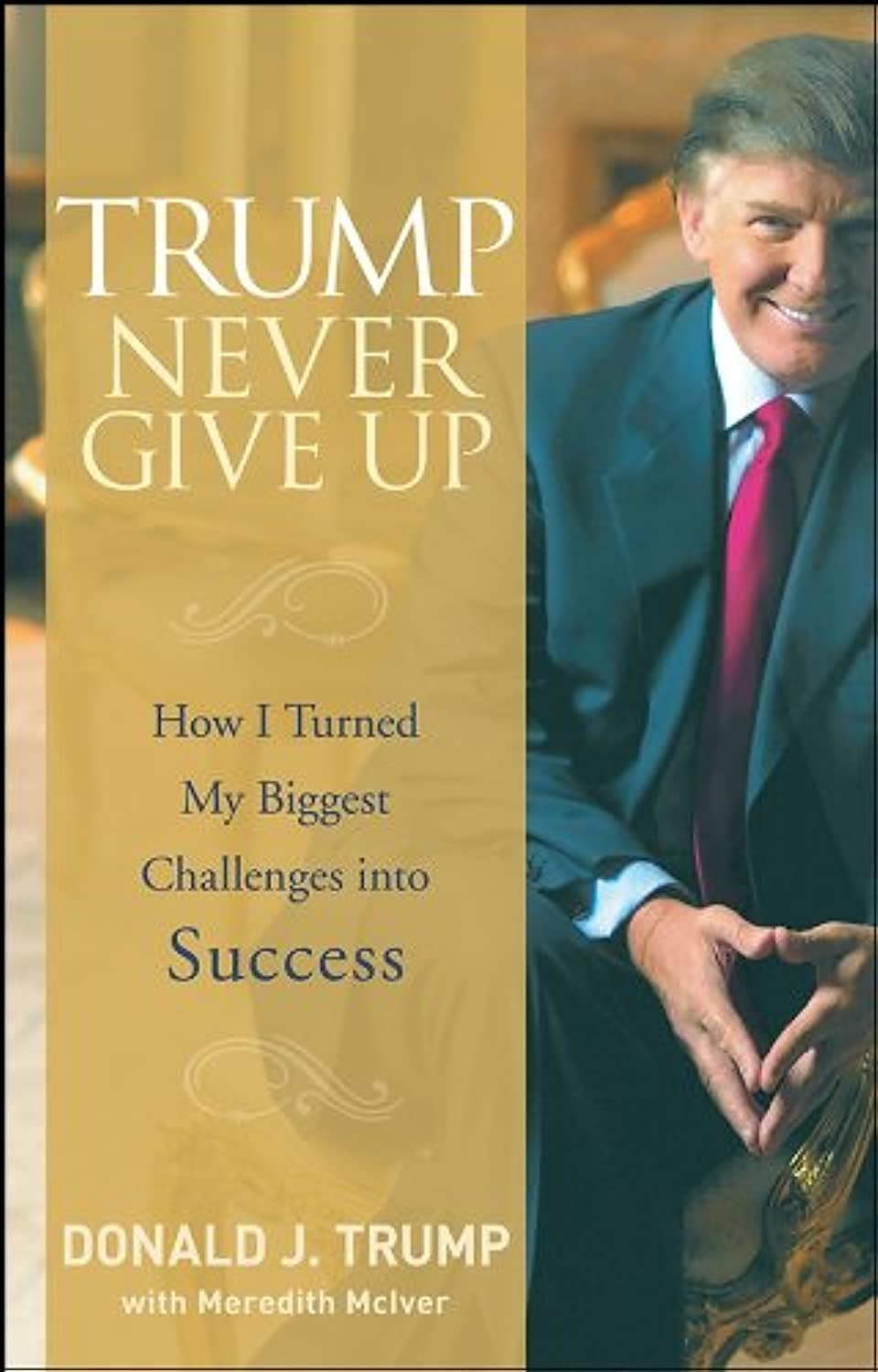
Say what you will about Trump, he built a real estate empire and became one of the most recognizable developers of our time. This book is not about politics, it's about mind-set and overcoming adversity. It was a good follow-up to Trump: The Art of the Deal.
Highlights
Giving up is something that never entered my mind. Not for one second, and that’s one reason I think I confounded my critics. They were trying to skewer me, but it had the opposite effect—it just made me want to make a comeback and in a big way. I knew I could prove them wrong by being stubborn, being tenacious, and not giving in or giving up.
I’d also already learned that problems are often opportunities in disguise. I began to see my situation, believe it or not, as a great opportunity.
Then there was a turning point, and that turning point was my attitude.
Focus on the solution, not the problem!
It’s odd, but in retrospect, I think having a near wipeout made me a better businessman and certainly a better entrepreneur. I really had to think in out-of-the-box ways to keep from being buried alive. I also relied on something I’d like to discuss here: positive thinking. Believe me, it works.
Envision yourself as victorious. Focus on that instead of your nagging doubts and fears. Focus on objective insights and solutions. Pressure can diminish and disappear when you clobber it with a positive attitude. Even if you don’t feel indomitable, act that way for a while. It helps!
There is something profound and yet simple about viewing failure as a lack of wholeness. Believing that a negative situation is temporary and wrong will give you the impetus to do something about it, to feel righteous and energetic about fixing it. Being unhappy and unproductive is simply not part of my game plan, and it shouldn’t be part of yours, either. See a situation as unacceptable, as taking you away from wholeness, and you will be motivated to get out of it as quickly as possible.
It’s not just intelligence or luck that gets us places, it’s tenacity in the face of adversity.
One way to pave your way for a comeback (or for a first victory) is to read about people who have been courageous against long odds.
When failure comes your way, you must believe that you matter, that you can overcome it, and most importantly, that success is what is expected of you. You’d be surprised at what you can accomplish when that’s your attitude. It’s not just survival, it’s not just success, it is your obligation. A sense of duty toward wholeness will go a long way toward your personal and professional success. What I learned at the time of my worst
Faith in yourself can prove to be a very powerful force. Work on it daily. Sometimes when you’re fighting a lonely battle, keeping yourself company with positive reinforcement and faith in yourself can be the invisible power that separates the winners from the losers. Losers give up.
I often tell people that I listen to everyone, but the decision will ultimately be mine. That’s a good way to be in life and in business. Listen to others, but never negate your own instincts.
My father had always said, “Know everything you can about what you’re doing,” and that’s the advice I followed.
Adversity is a fact of life. Chances are that you will never wake up to an adversity-free day. Accept this as a challenge—rather than a disappointment. Be bigger than the problems, be ready to fight for your rights, and all will be well.
EXPECT PROBLEMS AND YOU’LL BE READY WHEN THEY COME
It helps to expect problems because then, in a sense, you’re ready for them and not thrown off balance. It’s good to remind yourself of that—daily, if necessary.
Who are some of the people in history you admire, and why? Abraham Lincoln is one, because he was president at the most difficult time in our country’s history. He was also self-educated and endured many years of adversity prior to becoming president. Another would be Winston Churchill, a leader at a pivotal time in world history—World War II. He was a great orator who inspired thousands of people with his speeches, and he won the Nobel Prize in literature for his historical writing.
I spent five years reviewing sites and I turned down over 200 possibilities for development throughout Europe. I was waiting patiently for the right place,
Sure, it might be more fun to watch movies but unless you’re going into the film industry, it’s not the best use of your time.
Yes, the original building had major problems; yes, the approval process was confounding, but that was part of the challenge. It also provided me with a great opportunity. Sometimes you have to look a little harder to see those opportunities, but believe me, it’s worth it.
Courage means never giving up. It’s much easier to give up, and that’s exactly what losers do. Being knocked down is one thing—staying down is another.
Hemingway wrote the now familiar phrase, “Courage is grace under pressure.” Think about it.
Courage isn’t the absence of fear, it’s the conquering of fear.
Problems are often opportunities coming at us in packaging that isn’t what we expect or want.
So when I say I welcome problems, there’s a reason for it. Keep your mind flexible and open to creative solutions to your problems. Einstein said, “You can’t solve a problem with the same thinking that created the problem.” That’s a good way to avoid brain cramps as well as find a solution.
I’ve always told people to know what they were doing first, to do due diligence to the nth degree, to be cautiously optimistic. I
Fortunately, I’m a patient man when it comes to things I care a lot about.
IF YOU SEE BIG PROBLEMS, LOOK FOR BIG OPPORTUNITIES
Use your mind to visualize how things might be, as you go along. That can make the plethora of details and setbacks just a part of the plan.
That’s a good point to remember—get the right people to work with you. When dealing with Hyatt, it was critical that I had gone around the president who was slowing things down and called Jay Pritzker directly. Now, finding a dedicated broker who added the right balance to my image was a smart move.
Don’t be afraid to pursue multiple options, or multiple people, at the same time. If one thing doesn’t work out, you’ve got back-up options. I promise you, not everything is going to work. In fact, you may have to try a lot of things to get just one thing to work. That’s tenacity, and it’s critical to success.
Emerson’s quote, “What lies behind us, and what lies before us, are tiny matters compared to what lies within us” is a good thought to keep in mind. It allows your mind to think big because there are big reservoirs of ideas inside all of us. It’s a way to open the channels of creative thought, which leads to discovery and achievement. It’s also a reminder that no matter how much you’ve accomplished already, there’s still more waiting for you to get done.
You already know I’m not big on complacency, and I’m also not big on know-it-alls. The more you know, the more you realize how much you don’t know. Having this attitude is a great way to set yourself up for some big success. To be any other way is to sell yourself short. How can you possibly discover anything if you already know everything?
When you suddenly get some great idea, ask yourself, “What am I pretending not to see?” That’s a good test for blind spots. Don’t throw out those sudden lightning-like ideas, but be circumspect about them.
What we don’t know can be as important as what we do know. If that thought doesn’t make you endlessly curious about the wide world, I don’t know what will.
My advice is to change your compass from local to global—while minding your local business.
Very often, what I want to do involves a lot of other organizations and a lot of bureaucracy. They say you can’t fight city hall, but I have no problem going against conventional wisdom.
Being well prepared for critical meetings has been one of the secrets to my success.
Success won’t happen to you unless you decide to take chances first. Don’t settle for failure when you can take a few risks and change the course of your life, or at least enhance it.
If you’re thinking, “I’m not sure if I can do this,″ turn it into, “It’s going to feel great when I do this!”
Thinking takes energy and it shouldn’t be wasted dwelling on the wrong things. For every problem there is a solution, and capable people will look for that solution. Make sure you’re one of the capable people.
Getting to the point is sometimes just a matter of asking yourself the right questions and answering them honestly.
My point here is that we can all do a little editing ourselves (of our own unnecessary chatter) when it comes to making a decision. Stay focused on solutions to problems, not details. That’s the power of focus. Use it!
I spend a lot of time preparing to make sure my presentations are seamless.
Complacency kills. Remember that your success and all good things that come your way are a direct result of your effort;
Everyone has his or her own way of letting off steam, letting go of tension, and changing thinking patterns. Whatever works for you is the best choice, as long as it’s not self-destructive or destructive to others. That’s why I like to golf. Golf is a brain game, but it can be totally relaxing at the same time. I find it opens my mind to new possibilities, and I can problem solve very effectively while I’m on the golf course.
Another way to de-stress is to replace negatives with positives. This applies in many areas, for example, I try to surround myself with positive people and get rid of the negative types.
Anyone who visits my office will notice that I have many photographs of my family—my parents, my children, and Melania. That’s a great positive focus to keep, not that I need reminders, but a glance now and then can keep things in perspective. I also have photos and mementos of achievements that have meant a lot to me over the years—so if the going is rough, I have tangible reminders of past successes. None of them were easy either.
My point is this: You will always have detractors. That’s life. The higher you aim, the more opposition you will encounter. In spite of this, there will always be someone who will see your good motives for what they are.
You might think I would get tired of all the fighting around Mar-a-Lago. It’s a funny thing, but sometimes you find that the more opposition you encounter—or create—by your actions, the more energy you get! Try that approach sometime instead of throwing in the towel or being disgusted when you run into opposition. You’ll find out how tough and smart you really are.
Repeat that to yourself: I’m doing the right thing, and I will not be beaten!
I don’t believe the customer is always right.
A complainer will always be a complainer. They’re trouble, plain and simple. They’re just not worth it.
I’m big on promotion because promotion works. It helps to get things done. It helps to get the public interested in what will ultimately benefit them.
I learned a lot from my father. I learned about competence and efficiency. One of the best pieces of advice he ever gave me was his favorite formula for success. I call it the Four-Step Formula: “Get in, get it done, get it done right, and get out.” In looking back, I realize I also learned this by watching him in action. That’s how he operated, and it worked.
Some people say that I’m blunt, that I’m brash, that I’m no-nonsense. That’s all true. To me, it’s a compliment because that’s how I get so much done. That doesn’t mean that I’m not patient—because I am, but when it’s time to get moving on something, the best thing to do is to get moving.
s. Give yourself a goal and focus on it. Write it down. There is a lot of information now that proves that making lists—even if you are able to do it in your mind, which I am—is effective. In fact, three lists should be in your mind at all times: Your daily goals first, your year’s goals second, and then your lifetime goals. Look at or think about these lists daily—it will help your focus tremendously.
There is no reason for me to spend my time doing what other people can do. My job is to find new projects for everyone to work on. Figure out what your job is and streamline your…
Positive thinking is creative thinking. You can’t be positive unless you also make an effort to think creatively about your situation.
I was always interested in foreclosures and would spend my time in college reading the listings of federally financed housing projects in foreclosure. That’s how I found Swifton Village in Cincinnati, Ohio. My father and I bought it together and it became my first big deal. I was still in college.
The thing to remember is that I went into this crummy place and decided not only to see it positively but creatively—and look at the results of that attitude. Cultivate it in yourself! Creative, positive thinking can be a powerful source for success.
Confidence can get you where you want to go. It’s so much easier to achieve when you feel good about yourself, your abilities, and your talents. That’s why I’m emphasizing confidence as a way to get the most from every day. It’s absolutely essential, so never let anyone undermine you,
Confidence is a magnet in the best sense of the word—it will draw people to you and make your daily life—and theirs—a lot more pleasant. Take the pains required to become what you want to become, or you might end up becoming something you’d rather not be.
It was Thoreau who wrote, “If you have built castles in the air, your work need not be lost; that is where they should be. Now put the foundations under them.” I couldn’t have said it better. Get your vision, get focused, and then do the work—starting today!
I can often be heard saying that my next project is going to be huge and that it will be a tremendous success. Why? First, I have confidence that it will be. Second, I know I have to live up to my own expectations. When you announce something publicly for the world to hear, you’d better be right or the day of reckoning won’t be sweet. Plus, announcing a new project always gets my adrenalin flowing.
The same goes for you. If you have something to be proud of and you can back up your claims, then go for it. Let people know. There’s no reason to be coy about great accomplishments. Marketing today requires that we grab the customer’s attention. It can make or break a business. I do most of my own public relations because I know how to advertise my own brand. If you have a product or service, learn to do the same. It will save you time and money. If you don’t believe in your product and can’t talk it up, who will? When people say, “that’s not my style,” I can understand up to a certain point, but my initial reaction is that maybe they’re not too confident about the quality of their work.
I’m not clairvoyant, but I take the time to be well informed. You can and should do the same thing. Spend some time on international events, read books, and keep ahead of what’s happening. Catching up can waste a lot of time—having some prescience can save you a lot of time. Keep your focus global and you may very well find yourself ahead of the game.
Recognize opportunity—it always hides behind problems and ugliness and failure—especially the failures of others. Every challenge or obstacle you come up against is simply an opportunity in disguise. Think big, think creatively, and you’ll see it. And don’t forget your gut instinct—it′s there for a reason.
If you’ve heard me speak, you may have noticed I emphasize several things repeatedly—never give up is one, being passionate is another, keeping focused is up there, and keeping your momentum runs a close fourth. I’ve learned those things from experience. Here’s the complete top 10 list I give when I speak at colleges: 1. Never give up! Do not settle for remaining in your comfort zone. Remaining complacent is a good way to get nowhere. 2. Be passionate! If you love what you’re doing, it will never seem like work. 3. Be focused! Ask yourself: What should I be thinking about right now? Shut out interference. In this age of multitasking, this is a valuable technique to acquire. 4. Keep your momentum! Listen, apply and move forward. Do not procrastinate. 5. See yourself as victorious! That will focus you in the right direction. 6. Be tenacious! Being stubborn can work wonders. 7. Be lucky! The old saying, “The harder I work, the luckier I get” is absolutely right on. 8. Believe in yourself! If you don’t, no one else will either. Think of yourself as a one-man army. 9. Ask yourself: What am I pretending not to see? There may be some great opportunities…
Negotiating is an art. There are nuances and finely honed techniques and rules to be aware of. Here are a few of them: • Know what you’re doing. My father used to tell me, “Know everything you can about what you’re doing.” • Remember, it takes a lot of smarts to play dumb. This is a good way to see how much your negotiating partners don’t know. It’s also a good way to see if they are bulldozing you. • Keep them a bit off balance. What they don’t know won’t hurt you, and that may help you down the line. Knowledge is power, so keep as much of it to yourself as possible. • Trust your instincts. Combine this with your homework and you’ll be ahead of the game. • Don’t be confined by expectations. There are no exact rules, and sometimes I’ve changed course in the middle of negotiations when something new has occurred to me. Remain flexible and open to new ideas, even when you think you know exactly what you want.• Know when to say no. • Remember that in the best negotiations, everyone wins.