- Rating
- 9/10
- Read
- October 2012
- Why I read it
- What I took from it
- My favorite idea
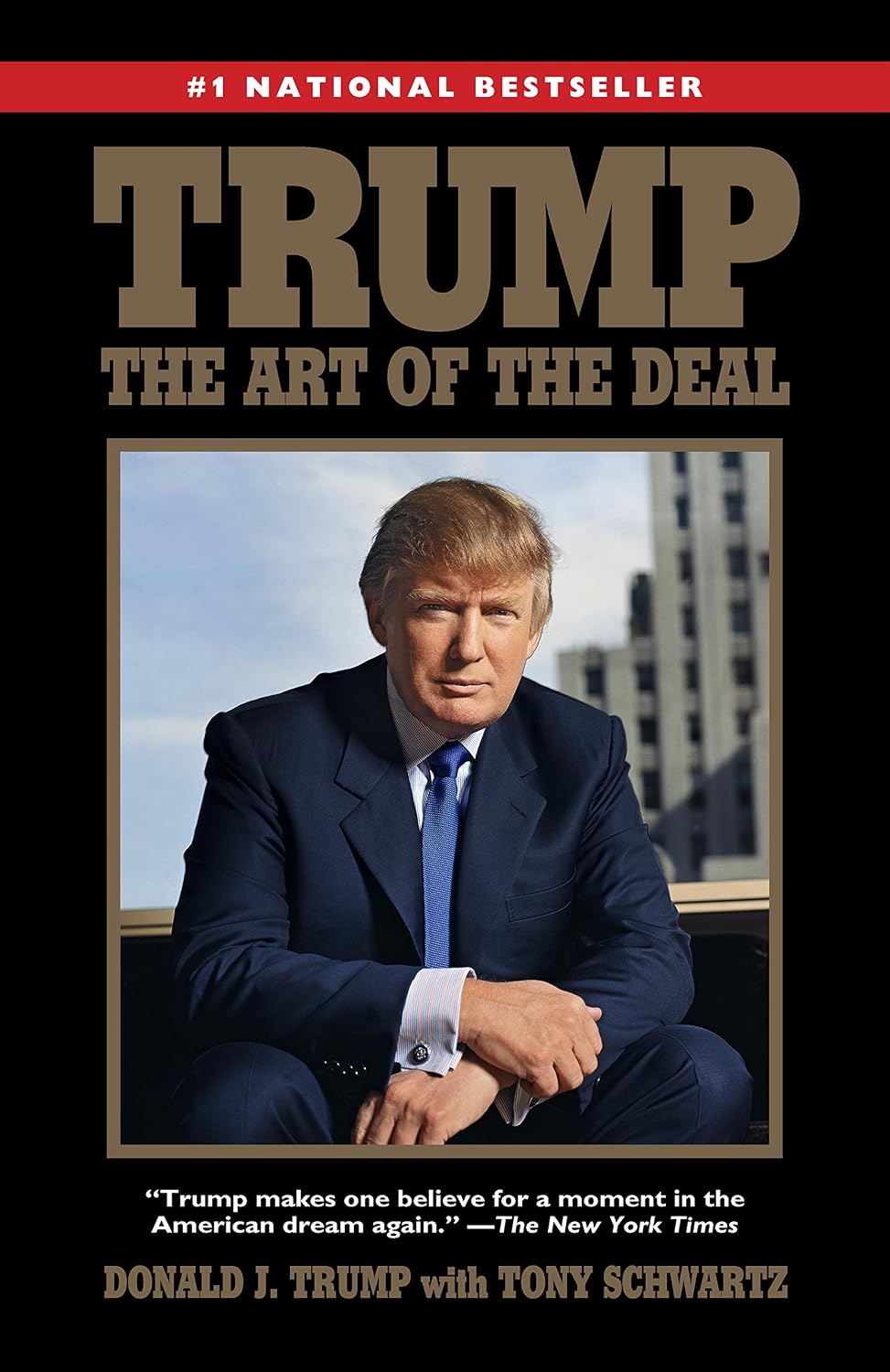
Published in 1987 and written with journalist Tony Schwartz, this book mixes a week in Donald Trump’s business life with the stories behind his early New York real estate deals, including the Grand Hyatt renovation, Trump Tower and the Wollman Rink in Central Park. Along the way he lays out his deal-making principles: think big, protect the downside and the upside will take care of itself, maximize your options, know your market, use your leverage, get the word out, and fight back when you have to. It reads as a fast, candid look at how he approached negotiation and real estate in the 1970s and ’80s.
Highlights
I try to learn from the past, but I plan for the future by focusing exclusively on the present. That’s where the fun is. And if it can’t be fun, what’s the point?
He’s also a very good salesman and businessman—and it’s the combination of those qualities that makes him so successful.
That experience taught me a few things. One is to listen to your gut, no matter how good something sounds on paper. The second is that you’re generally better off sticking with what you know. And the third is that sometimes your best investments are the ones you don’t make.
I think deal-making is an ability you’re born with. It’s in the genes. I don’t say that egotistically. It’s not about being brilliant. It does take a certain intelligence, but mostly it’s about instincts. You can take the smartest kid at Wharton, the one who gets straight A’s and has a 170 IQ, and if he doesn’t have the instincts, he’ll never be a successful entrepreneur.
Most people who try to get rich quick end up going broke instead.
If you’re going to be thinking anyway, you might as well think big.
The worst thing you can possibly do in a deal is seem desperate to make it. That makes the other guy smell blood, and then you’re dead. The best thing you can do is deal from strength, and leverage is the biggest strength you can have.
Leverage is having something the other guys wants. Or better yet, needs. Or best of all, simply can’t do without. Unfortunately, that isn’t always the case, which is why leverage often requires imagination, and salesmanship. In other words, you have to convince the other guy it’s in his interest to make the deal.
Leverage: don’t make deals without it.
Perhaps the most misunderstood concept in all of real estate is that the key to success is location, location, location. Usually, that’s said by people who don’t know what they’re talking about. First of all, you don’t necessarily need the best location. What you need is the best deal.
One thing I’ve learned about the press is that they’re always hungry for a good story. It’s in the nature of the job, and I understand that. The point is that if you are a little different, or a little outrageous, or if you do things that are bold or controversial, the press is going to write about you.
It's not how many hours you put in, it’s what you get done while you’re working.
I’m the first to admit that I am very competitive and that I’ll do nearly anything within legal bounds to win.
if you’re going to make a deal of any significance, you have to go to the top. It comes down to the fact that everyone underneath the top guy in a company is just an employee. An employee isn’t going to fight for your deal. He’s fighting for his salary increase, or his Christmas bonus, and the last thing he wants to do is upset his boss. So he’ll present your case with no real opinion.
When a reporter later asked me why I got a forty-year tax abatement, I answered, “Because I didn’t ask for fifty.”
However, I learned a lesson from Walter Hoving. I now employ some very large security people who make absolutely sure that the street in front of Trump Tower is kept clean, pristine, and free of peddlers.
I learned a lesson from that experience: good publicity is preferable to bad, but from a bottom-line perspective, bad publicity is sometimes better than no publicity at all. Controversy, in short, sells.
I have a very simple rule when it comes to management: hire the best people from your competitors, pay them more than they were earning, and give them bonuses and incentives based on their performance. That’s how you build a first-class operation.
Often, the easiest part of a deal is price. It’s all the other points—in this case, guarantees about construction completion, responsibility for defects, size of deposit, allocation of expenses between contract and closing—that end up creating problems and killing deals.
My attitude is that you can’t get hurt asking.
First, the press thrives on confrontation. They also love stories about extremes, whether they’re great successes or terrible failures.
Leadership is perhaps the key to getting any job done.