- Rating
- —/10
- Read
- May 2015
- Why I read it
- What I took from it
- My favorite idea
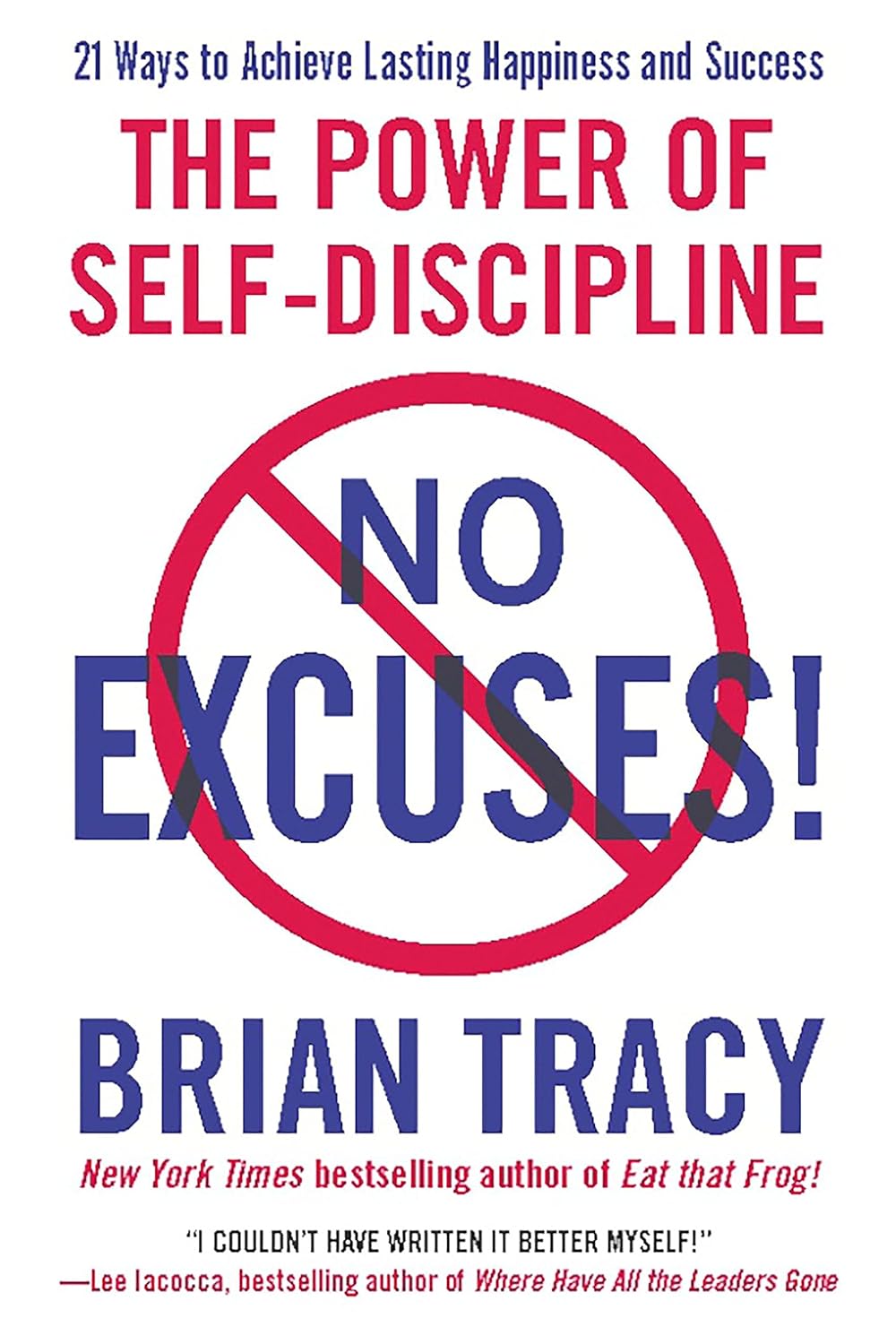
Brian Tracy, the author of Maximum Achievement, wrote this book around a single idea: self-discipline is the quality that separates people who succeed from people who don’t. He applies it across three areas of life, personal success, business and money, and health and happiness, in short chapters on things like setting goals, managing time, saving, exercising and following through. His argument is that discipline isn’t a trait you either have or lack. It’s a habit you build by doing what you should, when you should, whether you feel like it or not.
Highlights
Losers make excuses; winners make progress.
‘Self-discipline is the ability to do what you should do, when you should do it, whether you feel like it or not.’”
“The first and best victory is to conquer self.” —PLATO
Begin with your own personal definition. How do you define success? If you could wave a magic wand and make your life perfect in every way, what would it look like?
85 percent of this new generation of millionaires replied by saying something like “I didn’t have a better education or more intelligence, but I was willing to work harder than anyone else.”
The indispensable requirement for hard work is self-discipline. Success is possible only when you can overcome the natural tendency to cut corners and take the easy way. Lasting success is possible only when you can discipline yourself to work hard for a long, long time.
Then I learned the “Iron Law of the Universe,” which made getting into the top 20 percent possible. It was the Law of Cause and Effect, or sowing and reaping. This law says that “for every effect, there is a specific cause or series of causes.” This law says that if you want to achieve success in any area, you must determine how success is achieved in that area and then practice those skills and activities repeatedly until you achieve the same results.
The law of sowing and reaping, from the Old Testament, is a variation of The Law of Cause and Effect. It says that “whatsoever a man soweth, that also shall he reap.” This law says that whatever you put in, you get out. It also says that whatever you are reaping today is a result of what you have sown in the past. So if you are not happy with your current “crop,” it is up to you, starting today, to plant a new crop, to begin doing more of those things that lead to success—and to stop engaging in those activities that lead nowhere.
Success is not an accident. Sadly, failure is not an accident either. You succeed when you do what other successful people do, over and over, until these behaviors become a habit. Likewise, you fail if you don’t do what successful people do. In either case, nature is neutral. Nature does not take
sides. Nature doesn’t care. What happens to you is simply a matter of law—the law of cause and effect.
Everyone wants to be successful. Everyone wants to be healthy, happy, thin, and rich. But most people are not willing to pay the price. Occasionally, they may be willing to pay part of the price, but they are not willing to pay the whole price. They always hold back. They always have some excuse or rationalization for not disciplining themselves to do everything that they need to do to achieve their goals.
Kop Kopmeyer, who I mentioned in the Introduction, also told me that the second most important success principle, after self-discipline, is that you must “learn from the experts.
If you want to be successful, your first job is to learn what you need to learn in order to achieve the success you desire. Learn from the experts. Read their books. Listen to their audio programs. Attend their seminars. Write to them or approach them directly and ask them for advice.
The rule is that “to become someone that you have never been before, you must do something that you have never done before.” This means that to develop a superior character, you must exert ever-higher levels of self-discipline and self-mastery on yourself. You must do the things that average people don’t like to do. Another success principle is that “to achieve something that you have never achieved before, you must learn and practice qualities and skills that you have never had before.”
Action Exercises: Take out a pen right now and write down your answers to the questions below. 1. If your work life and career were ideal, what would they look like? What one discipline could you develop that would help you to achieve it? 2. If your family life were ideal, what would it look like, and what one discipline would help you the most to make it a reality? 3. If your health were perfect in every way, what disciplines would you have that make it possible? 4. If your financial situation were ideal today, what one discipline would you have that would help you the most? 5. Why aren’t you already as successful as you would like to be, and what one discipline would help you the most to achieve all your goals? 6. What one skill could you develop that would help you to realize more of your goals? 7. If you could wave a magic wand and be completely disciplined in one area, which one discipline would have the greatest positive impact on your life?
The person you are today, your innermost character, is the sum total of all your choices and decisions in life up to this date.
Study the Values You Admire. You learn values by studying them closely. The Law of Concentration says that “whatever you dwell upon grows and increases in your life.”
Emulate the People You Most Admire. Much of your character is determined by the people you most admire, both living and dead. Who are they? Looking over your life and history, make a list of the people whom you most admire, and next to their names, write out the virtues or values that they most represent to you.
Practice the Values You Respect. You develop values by practicing them whenever they are called for. As the Roman Stoic philosopher Epictetus said, “Circumstances do not make the man; they merely reveal him to himself.”
Your Self-Ideal. Your self-ideal is that part of your mind composed of your values, virtues, ideals, goals, aspirations, and your idea of the very best person that you can possibly be. In other words, your self-ideal is composed of those values that you most admire in others and most aspire to possess in yourself.
The most important part of your self-ideal is summarized in the word “clarity.” Superior people are those who are absolutely clear about who they are and what they believe. They have complete clarity about the values they believe in and what they stand for. They are not confused or indecisive. They are firm and resolute when it comes to any decision in which a value is involved.
Your Self-Esteem: How Much You Like Yourself. The third part of your personality is your self-esteem. This is how you feel about yourself, your emotional core. Your self-esteem is defined as “how much you like yourself,”
There is an old Indian story: “On my shoulders are two wolves. One is a black wolf, evil, who continually tempts me to do and say the wrong things. On my other shoulder is a white wolf
that continually encourages me to live up to my very best.” A listener asked the old man, “Which of these wolves has the greatest power over you?” The old man replied, “The one I feed.”
dwell on grows and increases in your life. When you think and talk about the virtues and values that you most admire and respect, you therefore program those values deeper and deeper into your subconscious until they begin to operate automatically in every situation. Whenever you exercise your self-discipline and willpower to live your life consistently with those values that you most aspire to be known for, you begin to move rapidly along the path to becoming an excellent person.
Action Exercises: Take out a sheet of paper and write out your answers to these questions. 1. Name three people, living or dead, who you most admire and describe one quality of each of them that you respect. 2. Determine the most important virtue or quality in your life that you strive the most to practice or emulate. 3. Identify those situations in which you feel the most confident, in which you feel like the very best person you could possibly be. 4. What situations give you your greatest feelings of self-esteem and personal worth? 5. If you were already an excellent person in every respect, how would you behave differently from today onward? 6. What one quality would you like people to think of when your name is mentioned, and what could you do to ensure this happens? 7. In what one area do you need to be more truthful and practice higher levels of integrity than you do today?
“The individual who wants to reach the top in business must appreciate the might and force of habit. He must be quick to break those habits that can break him–and hasten to adopt those practices that will become the habits that help him achieve the success he desires.” —J. PAUL GETTY
Your ability and willingness to discipline yourself to accept personal responsibility for your life are essential to happiness, health, success, achievement, and personal leadership.
The common denominator of all people is the desire to be happy. In its simplest terms, happiness arises from the absence of negative emotions.
Action Exercises: 1. Resolve today to accept 100 percent responsibility for everything you are and for everything you become. Never complain, never explain. 2. Look into your past and select a person or incident that still makes you unhappy today. Instead of justifying your negative feelings, look for reasons why you were partially responsible for what happened. 3. Select a relationship in your past that made you unhappy, and then give three reasons why you were responsible for what
occurred. 4. Select one person in your past with whom you are still angry and resolve to forgive that person completely for what happened. This act will liberate you emotionally. 5. Accept complete responsibility for your financial situation and refuse to blame any financial problems on anyone else. Now, what steps are you going to take to resolve that situation? 6. Accept complete responsibility for your family situation, with each person, and then take immediate action to improve your relationships wherever there may be problems. 7. Accept 100 percent responsibility for your health. Resolve today to do or stop doing whatever is necessary for you to attain excellent all-around health.
“Discipline is the bridge between goals and accomplishment.” —JIM ROHN
“If you don’t know where you’re going, any road will get you there.” And as Wayne Gretsky said, “You miss every shot you don’t take.” The very act of taking the time to decide what you really want in each area of your life can change your life completely.
The tragedy is that most people think that they already have goals. But what they really have are hopes and wishes.
Goals that are not written down and developed into plans are like bullets without powder in the cartridge.
the disciplined act of writing out goals, making plans for accomplishing them, and then working on those goals daily increases the likelihood of achieving your goals by ten times, or 1,000 percent. This does not mean that writing out your goals guarantees success, but rather that it increases the probability of success by ten times.
Aristotle wrote that human beings are teleological organisms, which simply means that we are purpose driven. Therefore, you feel happy and in control of your life only when you have a clear goal that you are working toward each day.
Step 1: Decide Exactly What You Want. Be specific. If you want to increase your income, decide on a specific amount of money rather than to just “make more money.”
Step 2: Write It Down. A goal that is not in writing is like cigarette smoke: It drifts away and disappears. It is vague and insubstantial. It has no force, effect, or power. But a written goal becomes something that you can see, touch, read, and modify if necessary.
Step 3: Set a Deadline for Your Goal. Pick a reasonable time period and write down the date when you want to achieve it.
Step 4: Make a List of Everything You Can Think of That You Could Possibly Do to Achieve Your Goal. As Henry Ford said, “The biggest goal can be accomplished if you just break it down into enough small steps.” • Make a list of the obstacles and difficulties that you will have to overcome, both external and internal, in order to achieve your goal. • Make a list of the additional knowledge and skills that you will need in order to achieve your goal. • Make a list of the people whose cooperation and support you will require to achieve your goal. • Make a list of everything that you can think of that you will have to do, and then add to this list as new tasks and responsibilities occur to you. Keep writing until your list is complete.
Step 5: Organize Your List by Both Sequence and Priority. A list of activities organized by sequence requires that you decide what you need to do first, what you need to do second, and what you need to do later on.
Step 6: Take Action on Your Plan Immediately. Take the first step—and then the second step and the third step. Get going. Get busy. Move quickly. Don’t delay. Remember: Procrastination is not only the thief of time; it is the thief of life.
Step 7: Do Something Every Day That Moves You in the Direction of Your Major Goal.
Action Exercises: 1. Resolve today to “switch on” your success mechanism and unlock your goal-achieving mechanism by deciding exactly what you really want in life. 2. Make a list of ten goals that you want to achieve in the foreseeable future. Write them down in the present tense, as if you have already achieved them. 3. Select the one goal that could have the greatest positive impact on your life if you were to achieve it, and write it down at the top of another piece of paper. 4. Make a list of everything you could do to achieve this goal, organize it by sequence and priority, and then take action on it immediately. 5. Practice mindstorming by writing out twenty ideas that could help you achieve your most important goal, and then take action on at least one of those ideas. 6. Resolve to do something every day, seven days a week, to achieve your most
important goal until you are successful. 7. Continually remind yourself that “failure is not an option.” No matter what, resolve to persist until you succeed.
“We are what we repeatedly do; excellence then is not an act but a habit.” —ARISTOTLE
What Got You Here Won’t Get You Any Further
Abraham Lincoln once wrote, “The fact that some have become wealthy is proof that others may do it as well.”
The philosopher Bertrand Russell once wrote that “the very best proof that something can be done is that someone else has already done it.”
The starting point of your moving upward and onward toward becoming one of the most competent, most respected, and highest paid people in your field is simple: Make a decision!
When you decide to be one of the best people in your field, look around you and identify the people who are already at the top: • What characteristics do they have in common? • How do they plan and organize their days?
• How do they dress? • How do they walk, talk, and behave with other people? • What books do they read? • How do they spend their spare time? • Who do they associate with? • What courses have they taken? • What audio programs do they listen to in their cars? These are just a few of the questions you should ask in order to find out what successful people are doing that you might also need to do.
If your goal is to be in the top 20 percent of money-makers in your field, the first thing you need to do is find out what the people in the top 20 percent are earning today. This information is available. Just ask around. Check industry statistics. Go onto Google. You can find this information if you look for it.
else. There are three simple steps that you can follow to become the very best in your field: 1. Read sixty minutes in your field each day. Turn off the television and the radio, put aside the newspaper, and read material about your field for one hour each day before you start working. 2. Listen to educational audio programs in your car. Start them and stop them as you listen, so you can reflect on what you have just heard and think about how you can apply the ideas to your work. 3. Attend courses and seminars in your field regularly. Seek them out. Take online courses in the convenience of your own home, courses that enable you to upgrade your skills and give you important ideas that you can use to be even more successful.
It has been calculated that all you need to invest is about two extra hours per day to move from the average to the superior.
Your television set can make you rich or poor. If you watch it all the time, it will make you poor. Psychologists have shown that the more television you watch, the lower are your levels of energy and self-esteem. At an unconscious level, you don’t like or respect yourself as much if you sit there hour after hour watching television.
Step 1: Arise Two Hours Before Your First Appointment, or before you have to be at work.
Step 2: Rewrite Your Goals, Every Day. Get a spiral notebook and rewrite your major goals in the present tense every morning before you start out, without looking back at what you wrote the previous day.
Step 3: Plan Every Day in Advance. Make a list, and set priorities on your work before you start off.
Step 6: Ask Two Magic Questions After Every Call or Event. First, ask yourself, “What did I do right?” Then, ask yourself, “What would I do differently?” The first question, “What did I do right?” forces you to think through and recall all the correct things that you did in that last meeting, presentation, or event, even if it was not successful. Write them down. The second question, “What would I do differently?” forces you to think through all the different ways you could improve your performance in a similar situation. Write these ideas down as well.
Action Exercises: 1. Make a decision today to invest in yourself and getting better, as if your future depends on it—because it does. 2. Identify the most important skills you have that determine the quality and quantity of results you get at your work, and make a plan to get better in each one. 3. If you could wave a magic wand and become absolutely excellent in any one skill, which one skill would have the greatest impact on your earning ability? Whatever your answer, set that skill as a goal, make a plan, and work on it every day. 4. Set excellent performance in your work as a goal, and then determine exactly what you will need to do every day to join the top 20 percent or better in your field. 5. Look ahead three to five years and determine the new knowledge and skills you will need in order to lead your field in the future. Then start acquiring them today. 6. Select the top person in your field, the one you admire most, and use him or her as a role model for your own development. 7. Commit yourself today to lifelong learning, and never let a day go by without getting better in some area.
“Courage is not absence of fear; it is control of fear, mastery of fear.” —MARK TWAIN
Fortunately, all fears are learned; no one is born with fears. Fears can therefore be unlearned by practicing self-discipline repeatedly with regard to fear until it goes away.
Aristotle described courage as the “Golden Mean” between the extremes of cowardice and impetuousness. He taught that “to develop a quality that you lack, act as if you already had that quality in every situation where it is called for.” In modern terms, however, we say, “Fake it until you make it.”
Action Exercises: 1. Identify your three biggest fears in life, right now. What are they? 2. Determine what you would do in each of these situations if you were guaranteed of complete success. What actions would you take? 3. What have you always wanted to do but been afraid to attempt? What would you do differently if you were guaranteed success? 4. In what three areas of life and work do you most experience the fears of failure and loss? What steps could you take immediately to confront and eliminate those fears? 5. In what three areas of life do you most experience the fears of criticism, rejection, or embarrassment? How could you confront these fears and overcome them? 6. What one great goal would you set for yourself if you knew you could not fail? 7. What would you do differently in life if you had $20 million in the bank, but only ten years left to live?
“Beware of endeavoring to become a great man in a hurry. One such attempt in 10,000 may succeed. These are fearful odds.” —BENJAMIN DISRAELI
The primary reason for success is persistence, and, likewise, the primary reason for failure is lack of persistence, quitting too soon.
Don’t be surprised, shocked, or set back when things go wrong. Your best-laid plans will often fall apart. Instead, expect disappointments and setbacks as a part of life.
Seek the valuable lesson in every problem or difficulty.
Failures feel sorry for themselves when things go wrong, whereas successful people look
for the valuable lesson
Normal Vincent Peale used to say, “When God wants to send you a gift, he wraps it up in a problem. The bigger the gift that God wants to send you, the bigger the problem he wraps it up in.”
Napoleon Hill wrote, “Within every problem or obstacle lays the seed of an equal or greater opportunity or benefit. Your job is to find it.”
Action Exercises: 1. Identify one area in your life in which you need to persist even harder to achieve your goal, and then take action in that area. 2. Identify a goal in your life that you did not accomplish because you failed to persist through to completion. What steps could you take today to succeed in that area? 3. Identify one big goal that you achieved because you persisted and refused to give up, no matter how difficult it became. 4. Decide on your major definite purpose in life, the one goal that, if you achieved it, would have the greatest positive impact on your life. 5. Write down your goal clearly, make a detailed plan of action to accomplish it, and then tell yourself that “failure is not an option.” 6. Make a decision today that you will persist until you succeed, no matter what happens, because “I am unstoppable.” 7. Resolve to set and achieve one important goal, overcoming the inevitable difficulties, problems and setbacks you will experience, and to work at it until you succeed. Repeat this process over and over until persistence becomes a habit.
First, make a list of all the things that you do in a week or a month, from the time you start work on Monday morning through to the end of the week. Write everything down, both small and large, including checking your e-mail and returning phone calls. Then, review this list and ask this key question: “If I could do only one thing on this list, all day long, which one task or activity contributes the most value to my company?” As you go over your list, the correct answer will probably jump out at you. Whatever it is, put a circle around it. Then ask the second question: “If I could do only two things on this list, all day long, which would be the second task or activity?” Review your list again, and identify your second most important task in terms of contribution to your company. Finally, ask the question once more:
“If I could do only three things on this list, all day long, what would be the third item?” We call this the “Law of Three.” The Law of Three says that there are three primary things you do that contribute 90 percent or more of your value to your company or organization. Your job is to identify those three critical tasks and then discipline yourself to do them all day long.
You need to do this because you must be sure. Benjamin Tregoe, cofounder of the Kepner-Tregoe consulting firm and author of The Rational Manager, once said, “The very worst use of time is to do very well what need not be done at all.”
Here is a simple three-part formula for success at work: Come in a little earlier, work a little harder, and stay a little later. This will move you so far ahead of your competitors that they will never catch up.
Action Exercises: 1. Make a decision today that you are going to become one of the top 20 percent of people in your company—and your industry. What should you or could you do differently? 2. Make a list of everything you do in your job and then identify the three tasks that contribute the greatest value to your work and company. 3. Set a new work schedule for yourself and begin to start earlier, work harder, and stay later until it becomes a habit. 4. Identify the most important results you are expected to achieve in your job, and then work on those results all day long. 5. Determine the person who is the best dressed and groomed in your company, and then resolve to use him/her as a role model for your own appearance. 6. Decide today that, from now on, you are going to actually work all the time you are at work and that you are going to develop the reputation for being the hardest
working person in your company. 7. Develop a sense of urgency. Resolve to move fast when you are given a job or opportunity. This can change your life.
“Nothing is more harmful to the service than the neglect of discipline; for it is discipline more than numbers that gives one army superiority over another.” —GEORGE WASHINGTON
Action Exercises: 1. Ask yourself, “What results are expected of me?” and then concentrate single-mindedly on getting those results every day. 2. See yourself as the leader of your organization and ask yourself, “What kind of a company would this company be if everyone in it were just like me?” 3. Create a clear, exciting vision for yourself and your organization based on success and excellent performance. 4. Identify the most important people in your business world and determine how you will have to behave toward them to get them to perform at their best. 5. Resolve in advance that, when the inevitable crisis occurs, you will respond in a calm, controlled, and intelligent manner. 6. Clarify the exact values and principles you believe in and stand for, and then share them with the people around you. 7. Treat each person around you as if he is competent, valuable, and important. This is the key to gaining the loyalty and commitment that you require as a leader.
“The quality of self denial in the pursuit of a longer term goal, and indeed, the willpower to maintain that level of self denial, is an excellent training for the boardroom.” —JOHN VINEY
predictable stream of new leads for your business. To market effectively, you must be clear about your competitive advantage and your unique selling proposition: What is it about your product or service that makes it superior and more valuable for a customer than any other similar product or service being offered today?
The Purpose of a Business Is to Please Its Customers
What is the purpose of a business? The purpose of a business is to create and keep a customer in a cost-effective manner. Profits are not the purpose of a business. Profits are the result of creating and keeping a sufficient number of customers who yield a sufficient number of profits after all costs.
To succeed in business, you need the self-discipline to be proactive rather than reactive. You need to focus on solutions rather than problems. You need to concentrate on the most important thing you could possibly be doing every hour of every day rather than getting sidetracked by low-value or no-value tasks and activities.
Action Exercises: 1. Stand back and look at every area of your business, as if you were an outside consultant. What changes would you recommend? 2. Imagine you were starting your business over again today. Are there any products or services that you would not bring to the current market? 3. Identify the 20 percent of your products and services that account for 80 percent of your sales and profits. How could you sell more of them? 4. Project forward one, two, and five years in your business. What are the trends? What will your customers be buying in the future?
5. List three ways you could improve your customer service to ensure that customers buy from you again and tell their friends. 6. List three ways that you could attract more and better qualified leads from your marketing and advertising activities. 7. List three ways that you could make more sales to the prospects you attract or that you could attract more and better prospects.
As Winston Churchill said, “Success is the ability to go from failure to failure with no loss of enthusiasm.”
If you want to increase the number of sales, simply discipline yourself to call on more prospects. When you increase your levels of sales activity, you also activate the Law of Probabilities to work on your behalf. You tap into the law of averages. You “work the numbers” to ensure success.
as possible. The actual sale itself is not under your direct control. It is controlled by a variety of factors about which you can do very little. But the activities that lead to sales are completely under your control.
To achieve high levels of sales success, you must discipline yourself to plan your days and weeks in advance. You must discipline yourself to plan your sales activities—especially your prospecting activities—every single day, and then you have to discipline yourself to follow through on your plans and resolutions.
“if you do what the most successful salespeople do, over and over, there is nothing that can stop you from eventually achieving the same results and rewards that they do.”
Action Exercises: 1. See yourself as the president of your own personal sales corporation, completely responsible for sales results. This is the attitude of the highest paid salespeople. 2. Set clear, written income goals for yourself for the next twelve months as well as goals for each month of the year. 3. Determine exactly how much of your product or service you will have to sell in order to earn that desired income. 4. Determine how many individual sales you will have to make, based on your average size of sale and amount of commission earned. 5. Determine how many prospects you will have to call on, based on your current experience, to make this number of sales. 6. Dedicate yourself to continuous improvement in sales by reading each day, listening to audios in your car, and attending sales seminars. 7. Spend every minute of every sales day getting face to face with people who can and will buy from you in the near future.
“In reading the lives of great men, I found that the first victory they won was over themselves; self discipline with all of them came first.” —HARRY S. TRUMAN
Action Exercises: 1. Make a decision today to take complete control of your financial life, get out of debt, and achieve financial independence. 2. Determine your net worth today. Add up all your assets, subtract all your debts and liabilities, and calculate the exact number.
3. Set up a separate bank account and begin saving at least 1 percent of your income as you receive it every month or paycheck. 4. Make a list of all your debts and begin paying them off, starting with those carrying the highest interest rates. 5. Calculate the exact amount that you will need to be financially independent at the end of your career and then set this as a goal. 6. Set specific financial accumulation goals for yourself for each month, quarter, and year for the rest of your life. 7. Practice frugality in spending by putting off and delaying every expenditure you possibly can until you achieve your long-term financial goals.
“If you do not conquer self, you will be conquered by self.” —NAPOLEON HILL
As Peter Drucker said, “You cannot manage time; you can only manage yourself.”
The fact is that you cannot save time; you can only spend it differently. You can only reallocate your time usage from areas of low value to areas of high value.
Action Exercises: 1. Make a decision today to become absolutely excellent at time management. Work at it until it becomes a habit. 2. Before you begin each day, make a list of everything you have to do that day. As new tasks arise, write them down before you act on them. 3. Organize your work list by priority by using the A B C D E Method over and over until it becomes a habit. 4. Identify your A-1 task each day and
resolve to work single-mindedly on that task until it is totally complete. 5. Identify the one task that only you can do and that, if you do it well, can make a real difference. 6. Determine the 20 percent of your tasks that can account for 80 percent of your results, and then discipline yourself to work on them most of the time. 7. Every minute of every day, ask yourself, “What is the most valuable use of my time, right now?” and then discipline yourself to work on only that task until it is complete.
Thoughts are causes and conditions are effects. Therefore, the quality of your thinking largely determines the quality of your life. The greatest mental principle is that “you become what you think about most of the time.”
The Sufi philosopher Izrhat Khan once said, “Life is a continuous succession of problems, like waves from the ocean. They never stop.” This means that your ability to practice self-discipline, self-mastery, and self-control when faced with the never-ending flow of problems, difficulties, setbacks, and temporary failures you will experience is essential to your success in business and in life.
Top people have developed the ability to respond effectively to a crisis, to remain calm, relaxed, and clear-eyed. They discipline themselves to stay cool and unemotional. This enables them to think more clearly, to analyze the situation objectively, and to make better decisions.
Step 1: Take the Time to Define the Problem Clearly. In medicine, they say that “accurate diagnosis is half the cure.” Therefore, you need to ask, “What exactly is the problem?”
Step 2: Ask, “Is It Really a Problem?” Remember, there are some things that you can do nothing about. They’re not problems; they are merely facts of life.
Also, very often what appears to be a problem or a setback is actually an opportunity in disguise.
Step 3: Ask, “What Else Is the Problem?”
The more ways you can define a problem, the more likely it is that you will find the best solution.
When we work with corporations in which sales are below a desired level, we force them to ask twenty-one questions, all of which are different ways of restating the problem.
Step 4: Ask, “How Did This Problem Occur?” Seek to understand the causes of the problem so you can ensure that it doesn’t happen
again.
Step 5: Ask, “What Are All the Possible Solutions?”
Step 6: Ask, “What Is the Best Solution at This Time?”
Action Exercises: 1. Solving problems is like solving mathematical equations: It is learnable with practice and repetition. Start by determining the biggest problems facing you today. 2. Accept complete responsibility for solving the problems you encounter in your daily work, and then think about the solutions. 3. Define your biggest business or personal problem clearly. Write it down. What exactly is the problem? 4. Why is this a problem? Could it be an opportunity in disguise? If so, what opportunity or lesson could this problem contain? 5. What else is the problem? Perhaps the real problem is something else, something you might not want to face? 6. What are all the possible solutions? What else could be a solution? 7. Select the best solution that is available to you right now, and take action immediately.
“You feel happy to the degree to which you feel you are in control of your own life. You feel unhappy to the degree to which you feel you are not in control, or controlled by other factors or people.”
Action Exercises: 1. Identify the areas of your life in which you feel the happiest and the most in control. How could you expand them? 2. Identify the areas of your life in which you feel controlled by other people or factors. What could you do to resolve these situations? 3. Identify those areas in your life in which there is a gap between your current levels of accomplishment and what you would really like to achieve. What could you do to bridge these gaps?
4. Identify the most pressing needs you have today that are not being fulfilled. How could you begin to satisfy these deficiency needs? 5. Identify those activities that give you the greatest feeling of personal happiness, your “peak experiences” in life. What could you do to increase these moments of happiness? 6. Identify those areas in life in which you feel the most discontented. What steps could you take immediately to resolve these feelings of discontent? 7. Define “happiness” for yourself. What does it mean? What would have to happen for you to feel truly happy? What could you do immediately to create this situation?
“Self respect is the root of discipline; the sense of dignity grows with the ability to say no to oneself.” —ABRAHAM JOSHUA HESCHEL
Action Exercises: 1. Idealize with regard to your health: If you could wave a magic wand and make your health perfect in every way, how would it be different from today? 2. Resolve to make the rest of your life the best of your life. What is the first thing you should change or do? 3. Get a complete medical examination and ask your doctor for advice on how to enjoy superb levels of physical health. Then follow that advice. 4. Determine your ideal weight and set it as a goal. Use the goal-setting process you learned in Chapter 4 to make a plan to achieve it and keep it there for life. 5. Use mindstorming (described in Chapter 4) and write out a list of at least twenty answers to the question, “What can I do every day to enjoy superb levels of health and energy?” 6. Review the health habits and research discussed in this chapter and give yourself a grade ranging from one to ten on how well you are practicing them. 7. Decide on one specific action that you are going to take immediately to ensure that you live to be age eighty, ninety, and beyond.
Action Exercises: 1. Today is the day! Make a decision that you are going to achieve the best physical condition of your life in the months ahead, and then take action immediately. 2. Get a complete medical examination so that you know your condition and limits before you begin. 3. Start walking thirty minutes each day, preferably first thing in the morning or, if not in the morning, right after work. 4. Join a gym or health club, pay for a year, and make an appointment with yourself to work out five times a week, sixty minutes each time. 5. Hire a personal trainer and have him/her guide you through an exercise program that includes aerobics, strength, and flexibility exercises each week. 6. Invest in a treadmill, a LifeCycle, or an elliptical machine and put it in front of your television so you can exercise as part of your home and family life. 7. Start gradually and work up slowly, resolving to exercise for several weeks before you notice a major difference. Be patient, persistent, and determined.
Action Exercises: 1. What is the most important single
action you could take, right now, to increase the love and harmony in your marriage or relationship? 2. What disciplines or practices could you develop that would improve the quality of your marriage for the other person? 3. Identify one behavior you could engage in that would improve your communications in your marriage. 4. Sit down with your spouse and ask him/her for ideas for things that you should do more of, less of, start, or stop doing. 5. Identify the two qualities that you most admire in your partner. 6. Identify the areas in which you and your partner are the most compatible. 7. Identify the most important values that you and your partner share.
Action Exercises: 1. Take the forgiveness test: Do you
want to be right or do you want to be happy? 2. Identify the people from your past who you feel have hurt you in any way, and then make a decision today to forgive them and let go of those negative feelings. 3. Find reasons not to justify your negative emotions of blame or anger, and instead, use your intelligence to accept responsibility. 4. Set peace of mind as your highest goal, and then resolve to let go of any thoughts or emotions that disturb you in any way. 5. Begin today to read something spiritual and uplifting each morning before you begin your day. This habit will change your life. 6. From now on, refuse to take things personally. Ask yourself how much it will matter five years from today. 7. Practice the Buddhist method of detachment from money and material things, and refuse to become upset or worried about anything.