- Rating
- —/10
- Read
- August 2014
- Why I read it
- What I took from it
- My favorite idea
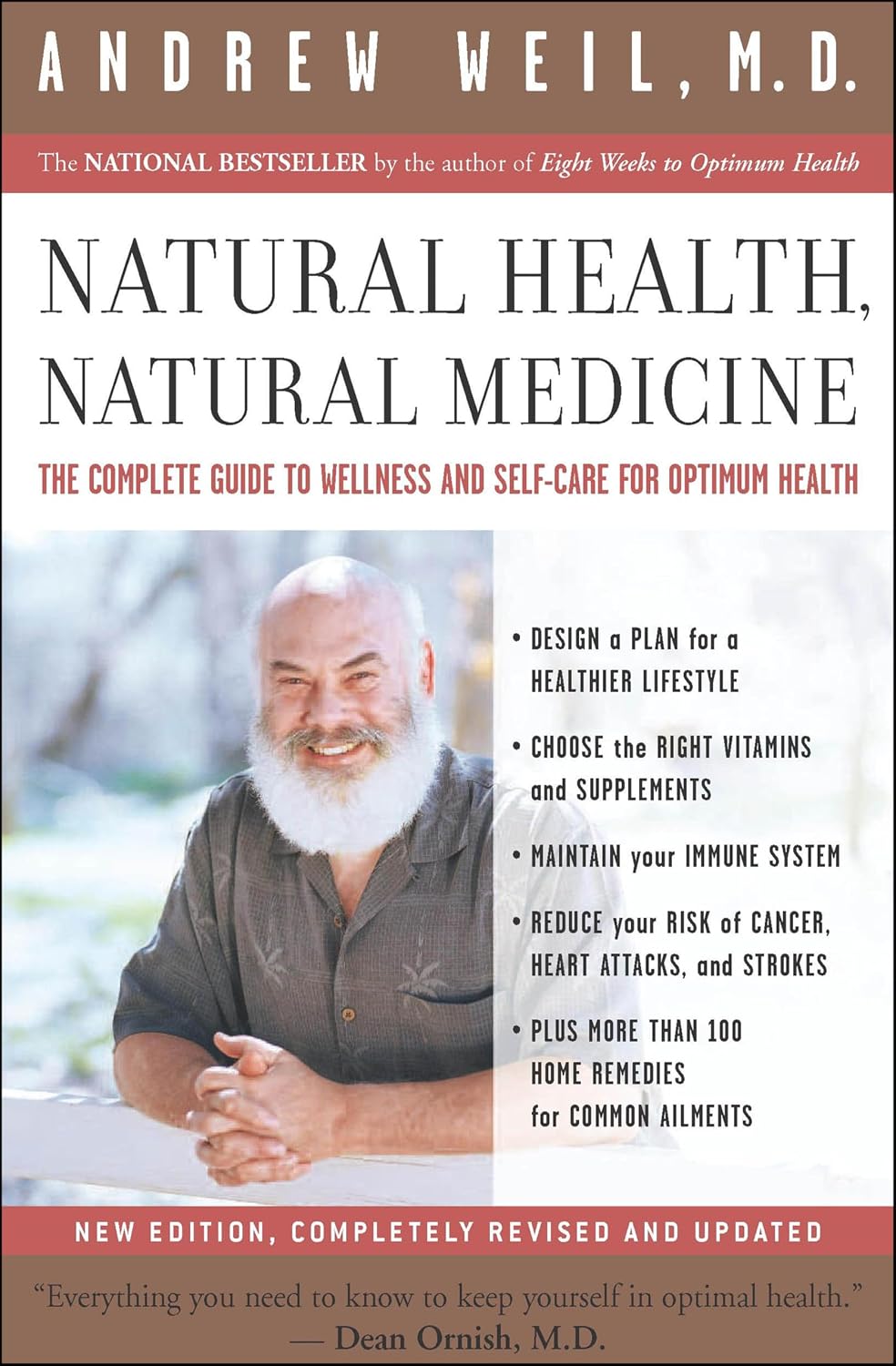
Andrew Weil is a Harvard-trained physician and one of the best-known advocates of integrative medicine, which combines conventional medicine with diet, lifestyle and natural approaches. This book is his practical reference for everyday health: what to eat, how to exercise, how to handle stress and sleep, and how to take care of common problems at home. A recurring theme is that the body has a strong capacity to heal itself, and that good daily habits do more for long-term health than any single treatment, while knowing when to see a doctor still matters.
Highlights
You have the final say over what does and does not go into your mouth and stomach. You cannot always control the other determinants of health, such as the quality of the air you breathe, the noise you are subjected to, or the emotional climate of your surroundings, but you can control what you eat. It is a shame to squander such a good opportunity to influence your health.
By varying what you eat, you protect your health in two ways. First, you ensure that you get all the nutrients you need. If you eat the same foods day after day, you are more likely to shortchange yourself of needed vitamins, minerals, or other elements.
The second reason to vary your diet is that it is the best way to avoid eating too much of anything that is not good for you.
Research shows that animals fed somewhat less than the "recommended" daily allowance of calories live longer and have fewer diseases than those put on standard diets or allowed to eat as much as they want.
Starches are complex carbohydrates,
When we eat carbohydrates, our bodies metabolize or "burn" them, releasing their stored energy and breaking them down again to water and carbon dioxide. For both plants and animals, carbohydrates are high-quality fuels, since it takes relatively little work to dismantle these compounds and release their energy.
Until recently, nutritionists divided carbohydrates into "simple" and "complex" and advised eating less of the former and more of the latter. Simple carbohydrates are sugars, complex ones starches. This turns out to be useless advice based on an obsolete understanding of how carbohydrates are digested. What counts is how quickly the body can turn a carbohydrate food into blood sugar. The speed of this conversion can be measured and quantified as the glycemic index (GI) on a scale from o to 100, with the GI of glucose—no digestion required—set at 100. The higher the GI of a carbohydrate food, the greater the impact on blood sugar and the greater the requirement on the pancreas to secrete insulin to allow blood sugar to enter cells to be metabolized.
The main difference between sugar and starch is that the body tends to burn sugar immediately and may be unable to store its energy. Starches do not create this difficulty. The body easily stores starch calories, turning them into sugar when needed.
Fats are the most calorie-dense nutrients, with nine calories per gram, almost twice that of carbohydrates and proteins.
Monounsaturated fats were considered neutral, neither raising nor lowering cholesterol levels and the risk of heart attack.
I believe that high-protein diets can irritate the immune system in some people, aggravating allergies and autoimmune diseases (such as rheumatoid arthritis and lupus, in which the immune system mistakenly attacks the body's own tissues).
Nuts and seeds are protein-rich, and most of them are also very high in fat. It's mostly good fat, the monounsaturated kind, and it comes with a lot of vitamin E, fiber, and trace minerals. Walnuts are a good source of omega-3 fatty acids. I eat nuts regularly, mostly raw, unsalted ones. A handful
Fiber consists of carbohydrates that are too complex for our digestive system to break down.
I think most people can benefit by increasing the amount of fiber in their diets, but we lack hard scientific evidence to
support some of the claims made by promoters of high-fiber diets. It is obvious that people who eat a lot of fiber have better-functioning intestinal systems than those who eat little.
You should be eating forty grams of fiber daily, which is about twice what most people consume.
Do I need to tell you why drinking plenty of good-quality water is as essential to health as eating properly? In a nutshell: one of the main activities of the body's self-healing system is
filtration of the blood, a job performed mostly by the kidneys with a little help from the mechanism of perspiration.
This purification system can operate efficiently only if the volume of water flowing through it is sufficient to carry away the wastes. Dehydration is the greatest threat to the process of blood purification and the commonest stress on the kidneys.
I have urged you to drink more water of good quality, and that is becoming a scarce and precious commodity.
no assurance that bottled water is of good quality. "Mineral water" is exempt from federal regulation, and only bottled water marketed across state lines is subject to federal drinking water standards, which, as I have said, are not adequate. Be suspicious of "spring water":
usually steam-distilled water, which, I think, is the best bet from the supermarket. It is likely to be cleaner than spring water or the more common water that has been purified by the ion-exchange method described below. I wish it were available in glass jugs.
Do not buy water from any bottler who will not tell you the source of the water and the method of purification used.
Breathing, as I wrote earlier, strongly influences mind, body, and moods. By simply putting your attention on your breathing, without even doing anything to change it, you move in the direction of relaxation. There are many worse places to have your attention—on your thoughts, for one, since thoughts are the source of much of our anxiety, guilt, and unhappiness. Get in the habit of shifting your awareness to your breath whenever you find yourself dwelling on upsetting thoughts. The single most effective relaxation technique I know is conscious regulation of breath. I will teach you a yogic breathing exercise I give to most of my patients. It is utterly simple, takes almost no time, requires no equipment, and can be done anywhere. Although you can do the exercise in any position, to learn it I suggest you do it seated with your back straight. Place the tip of your tongue against the ridge of tissue just behind your upper front teeth, and keep it there through the entire exercise. You will be exhaling through your mouth around your tongue; try pursing your lips slightly if this seems awkward. First exhale completely through your mouth, making a whoosh sound. Next close your mouth and inhale quietly through your nose to a mental count of four. Next hold your breath for a count of seven. Then exhale completely through your mouth, making a whoosh sound to a count of eight. This is one breath. Now inhale again and repeat the cycle three more times for a total of four breaths. Note that you always inhale quietly through your nose and exhale audibly through your mouth. The tip of your tongue stays in position the whole time.
You cannot do it too frequently. Do not do more than four breaths at one time for the first month of practice. Later, if you wish, you can extend it to eight breaths. If you feel a little lightheaded when you first breathe this way, do not be concerned; it will pass.
Meditation is directed concentration. Meditators learn to focus their awareness and direct it onto an object: the breath, a phrase or word repeated silently, a memorized inspirational passage, an image in the mind's eye. Researchers have documented immediate benefits in terms of lowered blood pressure, decreased heart and respiratory rate, increased blood flow, and other measurable signs of the relaxation response.
Many newcomers to meditation think the goal is to stop all thoughts. That is not possible. What you want to learn is to withdraw attention from the endless chains of associated thoughts that stream through the mind, putting attention instead on the object of meditation. Whenever you become aware that your attention has strayed—to images, sensations, thoughts of dinner, or whatever—gently bring it back to your chosen object.
There is ample
medical evidence that people who fail to establish meaningful connections have more illness, even that susceptibility to heart attack correlates with how often people use the words I, me, and mine in casual speech.
Whether you are male or female, it is worth starting at a young age to build good habits of eating, exercise, and relaxation that
1. Keep Your Serum Cholesterol Low One important predictor of a heart attack is high serum cholesterol, because it leads to the deposition of cholesterol in the walls of the coronary arteries,
2. Keep Your Serum Homocysteine Low Elevated serum homocysteine, a breakdown product of protein metabolism, is an independent risk factor for coronary heart disease and heart attack. The good news is that it is much more easily controlled than cholesterol. If you have an adequate intake of three B-vitamins—pyridoxine, folate, and cyanocobalamin—your homocysteine level will be low. Just take a B-complex vitamin
daily (see p. 235).
5. Follow an Anti-Inflammatory Diet A growing consensus among cardiologists pinpoints abnormal inflammation in artery walls as a root cause of atherosclerosis and coronary heart disease. (This can be measured by a new blood test for C-reactive protein.)
Here are the essentials of an anti-inflammatory diet: • Avoid margarine, vegetable shortening, all foods made with partially hydrogenated oils of any kind, and foods containing trans–fatty acids (TFAs). • Avoid polyunsaturated vegetable oils. • Increase intake of omega-3 fatty acids. • Minimize consumption of refined and processed foods. • Eat plenty of vegetables and fruits, especially berries. • Eat anti-inflammatory herbs like ginger and turmeric.
An average of thirty minutes of aerobic activity five days a week will improve the efficiency of the heart as a pump, tone the entire arterial system, lower elevated blood pressure, reduce serum cholesterol, reduce the chance of abnormal blood clotting, and help balance the activity of the autonomic nervous system (decreasing the risks of arrhythmia and coronary artery spasm).
7. Practice Relaxation Techniques Internalized stress can precipitate heart attacks through various mechanisms. It can increase serum cholesterol and blood clot ting. It can step up the activity of the adrenal glands and sympathetic nervous system, thereby causing the heart to work harder and increasing the risk ofarrhythmias and coronary artery spasm.
10. "Thin Your Blood
You should know that other methods of thinning the blood also exist. One is to include in the diet omega-3 fatty acids from oily fish (see p. 254) or from flaxseed oil (pp. 27–28). The principal benefit to the heart of the omega-3's may be their effect on blood clotting rather than on
serum cholesterol. Research on this point is not clear, but it is clear that populations eating the fish sources of these unusual oils have lower than expected rates of heart attacks. Raw garlic and raw onions, eaten regularly, decrease the clotting tendency and increase the body's ability to dissolve clots. The mechanism of these actions is not yet known. Another possible preventive measure is natural vitamin E. In addition to its antioxidant properties (see p. 239), it is an effective blood thinner. I recommend a daily dose of 400 IU (international units) for adults under the age of forty and 800 IU for those above that age. If you take your vitamin E capsule with a meal that has some fat content, it will be absorbed better from the GI tract, because it is one of the fat-soluble vitamins. I have not seen any toxicity from vitamin E. Yet another blood thinner is a Chinese mushroom, the tree ear, wood ear, mo-er, or ear fungus, all names for Auricularia polytricha, a rubbery, dark-brown species that is cultivated on logs.
You avoid strokes in much the same way that you avoid heart attacks: by eating a heart-healthy diet, exercising, practicing relaxation, treating high blood pressure, and not smoking.
High blood pressure is common, and you can do a lot about it (see the entry on hypertension on pp. 345–47).
1. Do Not Allow Infections to Persist One of the greatest strains on the immune system is an infection it cannot eliminate. Never ignore such symptoms as unexplained fevers, night sweats, or tender, swollen lymph nodes ("glands"); they can indicate a hidden infection.
One area of the body where infection often goes unnoticed is the mouth. Pockets of germs in the gums and teeth may cause few symptoms yet use up a lot of the body's immune resources. It is important to maintain good oral hygiene and to have the teeth and gums examined regularly to detect any areas of infection.
2. Do Not Use Antibiotics Indiscriminately Whenever the immune system deals successfully with an infection, it emerges from the experience stronger and better able to confront similar threats in the future.
you so far. In particular: • Avoid polyunsaturated vegetable oils and products made from them. Their tendency to form free radicals makes them dangerous to cells of the immune system. • Eat less protein. Residues of protein metabolism can irritate the immune system, especially in people prone to allergy and autoimmunity. A lower-protein diet with plenty of fruits, vegetables, and fiber is good for immunity as well as general health. • Do not eat many foods of animal origin. Meat, poultry, and dairy products often carry residues of antibiotics and steroid hormones that can weaken immunity. If you do eat these foods, try to get organic versions. • Minimize consumption of milk and milk products, especially if you are prone to allergy or autoimmunity. Cow's milk protein is a common irritant of the immune system.
Some of the most prized remedies in the Chinese herbal repertory are mushrooms that act as tonics—that is, they are believed to increase resistance to all kinds of stress as well as to extend longevity.
Tonic mushrooms are supposed to do just that. Some of them are good to eat: shiitake (Lentinula edodes), oyster mushrooms (Pleurotus ostreatus), maitake (Grifola frondosa), and enoki (Flammulina velutipes). for example. Others, like reishi (Ganoderma lucidum), are too woody or too bitter to use as foods but can be used as medicinal teas or extracts.
take a dose of a liquid extract of seven different species every day, and frequently recommend this and related products to patients. (See Chapter 14 for more information.)
The Chinese species is nontoxic, the source of a very popular medicine called huang qi that you can buy in any drugstore in China for use against colds, flus, and other respiratory infections. Recent studies in the West confirm its antiviral and immune-boosting effects, and Astragalus preparations are now available in most health food stores here; I recommend them often.
American Indian medicine gave us a useful native plant that is another immune-system booster: purple coneflower, Echinacea purpurea and related species.
For many years immunologists maintained that the immune system was the only autonomous system of the body, the only one that operated free of external controls. This is a silly idea. No system of the body is autonomous. All are interconnected, especially with the nervous system. In addition, the clinical experience of doctors who work with immune disorders is that a strong correlation exists between the ups and downs of these disorders and the ups and downs of emotional life. For example, a typical onset of rheumatoid arthritis in a young woman may be a flare-up in many joints of the body within hours of a severe emotional trauma. A few years ago I saw two patients with advanced lupus (systemic lupus erythematosus or
SLE, another autoimmune disease). Both were women in their thirties, one white, one black. The white woman was hospitalized with serious kidney damage and, as a result, uncontrollably high blood pressure. She also had serious toxicity from long treatment with steroids and other immunosuppressive drugs. Her prognosis was grave. The black woman was out of the hospital but also was very sick with kidney damage, high blood pressure, brain dysfunction, and drug toxicity. She was in better shape than the first patient, but her future also looked grim. The first patient underwent a religious conversion in the hospital and became a fundamentalist Christian. The second woman fell in love and subsequently married. Both went into complete remission and became symptom free.
The young science of psychoneuroimmunology is demonstrating the interconnections of mind, nervous system, and immune system. In many cases the connections are chemical, with small protein molecules called peptides being the messengers that take information from cell to cell. It is clear that the nervous, immune, and endocrine systems are in constant biochemical communication, linked by a web of peptide hormones. Wherever nerves are, the activities of the mind can travel.
Clearly, emotional states like grief and depression can interfere with immunity, just as loving can enhance it.
Do not try to stop or fight negative mental states. Instead, put energy into creating a positive state, and the negativity will tend to resolve.
Patients with autoimmunity will of ten benefit from hypnotherapy, guided imagery, and other mind/ body interventions.
suggested reading Minding the Body, Mending the Mind by Joan Borysenko, Ph.D. (New York: Bantam, 1988). The Immune Advantage: The Powerful Natural Immune-Boosting Program to Help You Prevent Disease, Enhance Vitality, Live a Longer, Healthier Life by Ellen Mazo (ed.) (Emmaus, Pa.: Rodale, 2002).
Superimmunity for Kids: What to Feed Your Children to Keep Them Healthy Now and Prevent Disease in Their Future by Leo Galland, M.D., and Dian Dincin Buchman (New York: Dell, 1989).
Rest is so simple that many people fail to think of it when they start to get sick. Your immune system requires energy to do its job. By cutting down on unnecessary expenditures of energy, you can give it a great advantage. Going to bed when you first notice a breakdown in health, canceling planned activities, and letting others take care of you is a much more sensible strategy than taking pills and going about your business. Even a twenty-four-hour rest may be enough to alter the course of an illness and put you on the road to recovery.
Fasting owes its effectiveness to a basic fact of physiology. The digestive organs are the largest and bulkiest in the body, and their routine operations consume large amounts of energy. The simple act of not eating rests this system and frees up much of that energy for the body to use in healing. Fasting means taking in nothing other than water (or water and herbal teas with no calories). Restricting yourself to liquids, fruit, or fruit juice is not fasting. These are special diets that have particular benefits but do not produce the same results as fasting.
There are two kinds of fasting, short-term and long-term, with very different consequences and uses. Short-term fasting means one to three days of taking in nothing but water. Short-term fasting alters both consciousness and physiology. It is a good home remedy for colds, flus, infectious illnesses, and toxic conditions of all kinds. If you combine it with rest and a good mental state, short-term fasting can make you feel like a new person. Many people report that even after one day of fasting their senses are sharper, their heads clearer, their bodies lighter and more energetic. Some like this feeling so much that they fast one day a week.
This practice can also be beneficial as a psychospiritual discipline.
Long-term fasting continues longer than three days. Do not attempt long-term fasting without expert supervision.
remember: • Be sure to drink plenty of liquid (water, mineral water, or herbal tea). This will help you avoid constipation and help your urinary system remove any toxic products of infection. • Conserve your energy. Do not expect to maintain normal activity or your usual exercise routines. • Stay warm. Your body temperature will fall when you fast. Especially if the weather is cold, do not let yourself get chilled. Dress warmly and drink some hot herbal tea. Take warm baths. • Do not look at food or at people who are eating. This will only make it harder to fast. • Break your fast sensibly. At the end of it, begin to eat some fresh fruit or fruit juice and light, plain foods in small amounts. If you go directly to pizza and enchiladas, you are likely to make yourself sick. • Do not fast if you are diabetic, pregnant, or nursing. • Do not fast in order to lose weight. It will not help you do so.
Sweating is a natural method of purification that enables the body to eliminate salt, drugs, and a variety of toxins as long as it is supplied with adequate water. You can do healthy sweating in a sauna or steam room. Just be sure to take along a plentiful supply of pure water and drink it often. Depending on the temperature, you can stay in the heat for ten to twenty minutes or until you are perspiring freely. I recommend sweats often, especially to people who smoke, drink, or use other drugs, suffer chemical exposures, eat a lot of salt, or have liver or kidney disease. (It reduces the workload on those organs.)
the very start of a viral infection may abort the illness or greatly reduce its severity. • Drink water before, during, and after the sweat in order to keep urine output high. Never let the body get dehydrated. • Allow yourself a rest period at the end of a sweat. You may be weak, dizzy, or unstable on your feet. • Use saunas and steam rooms with caution if you have high blood pressure or heart disease.
Steam inhalation is an excellent remedy for respiratory problems, particularly for chest congestion, bronchitis, bronchial cough, laryngitis, and sinusitis. You can rig up a steam inhalation tent in your kitchen by bringing a pot of water to boil on the stove, then standing over it with a towel over your head and the pot. (Be careful with the towel if you have an open flame.) Breathe steam through the nose for nasal and sinus problems, otherwise through the mouth with pursed lips. Another possibility is to roll a cone of stiff paper,
Nasal douching is the practice of rinsing the nasal passages with a saltwater solution. It is a hygienic practice of yoga as well as a marvelous treatment for sinus problems and allergic rhinitis (as in hay fever). Most people don't like the sensation of water in the nose, and some of us associate it with distress in swimming. Therefore it takes some practice to change these reactions and master the technique. Having the water at a comfortably warm temperature with just the right concentration of salt is critical. Dissolve one quarter teaspoon of salt in one cup of warm water. This approximates the concentration of sodium in blood and tissue fluids and is soothing to mucous membranes. There are
several ways to get this solution into the nose. You can pour it into your cupped hand and simply inhale the liquid through one nostril at a time while closing the other with an index finger. Or you can inhale it directly from a small cup or glass in the same way. You can tilt your head back and squirt the solution in gently with a rubber bulb syringe. Or you can pour it in slowly from a small container with a spout. (Yoga supply shops sell a ceramic device, called a neti pot, for this purpose that looks like a miniature Aladdin's lamp.) However you do it, you want to get enough water in through your nose so that you can spit it out your mouth. Do this several times through each nostril, then gently blow your nose. Do not be discouraged if you cough, splutter, and make a mess. You will soon learn to inhale the salt water neatly and efficiently and come to like the way it feels.
Gargling is an easy way to speed healing of sore throats as well as to open congested ears and help ear infections. The idea of gargling is to keep a healing solution in contact with the tissues of the throat. The simplest gargle is a warm saline solution: one quarter teaspoon salt to one cup of warm water. Use the warmest water you can stand. The heat increases blood flow to the affected areas, and the inflamed tissues are bathed with a restorative solution.
Hot and cold applications affect the body in simple yet powerful ways. In general, heat dilates blood vessels, increasing blood supply to an area, while cold does the opposite. You always want more blood in cases of infection. You always want less blood in cases of acute injury or of venomous bites and stings. Put hot compresses on boils, abscesses, splinters, and crampy muscles. Put cold compresses on bruises, sprains, traumatized joints and muscles, burns, bites, and stings.
Hot, wet heat is the best treatment for localized infections. Soak a towel in hot water, wring most of the water out, fold it, and apply to the affected area. Work up to as much heat as you can stand, re heating the towel whenever it starts to cool off. Do this for fifteen minutes at a time at least three or four times a day. If the infection is on the hand or foot, you can soak the part directly in a basin of hot water.
Hot and cold baths can very quickly change how you feel. Hot baths are relaxing. They increase blood flow to the surface of the body, soothe sore muscles and joints, and promote sleep. Cold baths are stimulating. They tone the muscles, circulation, and heart, increase mental alertness, and energize you. Experiment with baths of different temperatures to see how you react to them.
The body has its own self-cleaning, self-purifying systems; the best way to protect yourself from toxicity is to keep those systems in good working order. For example, the kidneys are a key component of our blood-purifying apparatus, and I have suggested ways of protecting their health by keeping them well supplied with pure water and avoiding dietary stresses like coffee, alcohol, and excessive protein.
Suggested Reading Home Remedies: Hydrotherapy, Massage, Charcoal, and Other Simple Treatments by Agatha Thrash, M.D., and Calvin Thrash, M.D. (1981, available from Thrash Publications, Route 1, Box Z73, Seale, Ala. 36875) is a very complete manual describing the use of hot and cold applications for a variety of common disorders.
If you take a multivitamin/multimineral supplement, make sure it does not contain iron unless medical tests have indicated that you need it and a physician has prescribed it.
• Make sure that any nutritional supplements you take are free of sodium.
• Do not take potassium supplements unless a doctor has prescribed them along with diuretics. • Some people who develop muscle cramps as a result of vigorous exercise may find potassium helpful.
Calcium helps regulate nerve and muscle function and is necessary to build strong bones.
If you do not eat dairy products, you can get calcium from cooked greens (collards especially), molasses, sesame seeds, broccoli, and tofu.
• Be sure to take magnesium with supplemental calcium. Without magnesium to balance it, large doses of supplementary calcium are constipating and may be unhealthy over time. Magnesium complements calcium in the same way that potassium complements sodium.
I recommend that you take 15 milligrams of zinc a day. I use zinc picolinate, which is rapidly assimilated. • Do not exceed 100 milligrams of supplemental zinc a day. Larger doses may have adverse effects on immunity.
There is no reason to take protein in supplemental form, ever.
Yeast, in powder or flake form, has long been a popular supplement. Brewer's yeast, a by-product of beer making, tastes bitter and is not as rich in some nutrients as nutritional yeast, which is grown specifically for human consumption. Nutritional yeast is a good source of the B-complex vitamins, trace minerals, and some protein (which you do not need). It is not expensive. A heaping tablespoon of yeast will color your urine yellow (owing to its content of riboflavin) and may have enough vitamin B-3 to give you a niacin flush.
Spirulina and chlorella are two varieties of freshwater algae, primitive plants that are cultivated for nutritional use, dried and sold as dark green powders or tablets. They are very expensive and heavily promoted as miracle supplements. What they provide is mostly protein, which you do not need, along with some vitamins, minerals, and omega-3 fatty acids. Claims made for these products are not substantiated by research.
Super blue-green algae is a newer product from Klamath Lake, Oregon, being aggressively sold by multilevel marketers with an almost religious fervor. I do not recommend it. The species used (Aphanizomenon) can produce nerve toxins and can also be contaminated with another algal species that makes liver toxins.
Barley grass, wheat grass, and alfalfa are green plants that some people believe to be full of nutritional blessings. The first two are the young shoots of sprouted grains. Alfalfa is a legume, usually grown to feed animals. Freshly squeezed wheat-grass juice is sold in some health food stores, as are dried green powders and tablets of all three plants. There is no evidence to back the claims made for these products, and I do not recommend using them.
• Look for supercritical extracts of herbs. The newest and possibly best method of extracting medicinal plants uses liquefied carbon dioxide under pressure as a solvent. Called "supercritical extraction," this process not only preserves maximum activity of the raw material, but it is also environmentally friendly, since it uses carbon dioxide rather than toxic volatile solvents.
• Do not take herbal medicines unless you need them.
• Experiment with herbal remedies conscientiously.
Aloe, or Aloe vera, is a succulent plant from Africa widely grown as an ornamental in warm regions. Many people have discovered the healing properties of the clear gel that fills the thick leaves of this plant. It is a superior home remedy for burns, so useful that you ought to keep a potted aloe plant in your kitchen to have available in case of an accident.
Aloe vera juice, sold in all health food stores, is intended for internal use. Although many claims are made for it, the only reason I know to take it is to help heal ulcers and other irritations of the gastrointestinal tract. In high doses, aloe is an irritant laxative, so if you want it to soothe the lining of your GI tract, you must stay below the laxative dose. A reasonable amount to try is one teaspoon after meals.
Garlic is a powerful natural medicine in addition to being a strong-flavored seasoning for food. In previous chapters I have referred to garlic's abilities to lower cholesterol and reduce the clotting tendency of the blood. It can also help lower high blood pressure. In addition raw garlic is a potent antibiotic, especially active against fungal infections, with antibacterial and antiviral effects as well. The best home remedy I have found for colds is to eat several cloves of raw garlic at the first onset of symptoms. Eating raw garlic does not appeal to everyone, but garlic loses its antibiotic
properties when you cook or dry it, and commercial garlic capsules do not preserve the full activity of the fresh bulb. You can make raw garlic more palatable by chopping it fine, mixing it with food, and eating it with a meal. Or cut a clove into chunks and swallow them whole like pills. If it gives you flatulence, eat less. If you eat garlic regularly and have a good attitude about it, you will not smell of it. Chewing some fresh parsley after eating garlic also minimizes the odor. By the way, a clove of garlic is one of the segments that make up a head or bulb.
I have in my files a paper from a Chinese medical journal describing the use of intravenous garlic to treat a rare and very serious fungal infection of the brain called cryptococcal meningitis. (We are seeing this more commonly now as an opportunistic infection in AIDS patients.) The Chinese researchers compared intravenous garlic to the standard pharmaceutical treatment, a very toxic antibiotic called amphotericin B. In this study the garlic worked better than the drug and caused no toxicity in any dosage.
I recommend one or two cloves of garlic a day to people who suffer from chronic or recurrent infections, frequent yeast infections, or low resistance to infection. Try it; it really works.
Ginger, the familiar spice, has a number of remarkable properties that recommend it for home use. It is a good treatment for nausea and motion sickness as well as a natural anti-inflammatory that is worth trying in all cases of arthritis, bursitis, and other musculoskeletal ailments. It tones the cardiovascular system and reduces platelet aggregation, as aspirin does. You can make a tea of fresh ginger by using about one half teaspoon of the grated root to eight ounces of boiling water. Cover and steep for ten to fifteen minutes, then strain, and add honey to taste if desired. You can also eat candied ginger or buy honey-based ginger syrups. Health food stores sell powdered extracts of ginger in capsules as well as supercritical extracts; both forms are convenient to use. One to two grams of powdered ginger a day is an average dose, but some people report successful treatment of inflammatory conditions with higher doses taken over several months.
musculoskeletal ailments. It tones the cardiovascular system and reduces platelet aggregation, as aspirin does. You can make a tea of fresh ginger by using about one half teaspoon of the grated root to eight ounces of boiling water. Cover and steep for ten to fifteen minutes, then strain, and add honey to taste if desired. You can also eat candied ginger or buy honey-based ginger syrups.
As with garlic, our familiarity with peppermint makes us less likely to take it seriously as a medicine, but in fact it is one of the most powerful and effective remedies for relaxing the involuntary muscles of the gastrointestinal tract. It is also nontoxic.
Tea tree oil, a recent Australian import, is extracted from the leaves of Melaleuca alternifolia, a native tree of New South Wales. Aborigines chewed the leaves for colds and drank a tea of them for general sickness. The oil is a powerful disinfectant and a most useful herbal remedy. It is a clear liquid, strongly aromatic, with an odor similar to that of eucalyptus. Tea tree oil is the best treatment I know for fungal infections of the skin (athlete's foot, ringworm, jock itch). It will also clear up fungal infections of the toenails or fingernails, a condition notoriously resistant to treatment, even by strong systemic antibiotics. You just paint the oil on affected areas two or three times a day.
skin (athlete's foot, ringworm, jock itch). It will also clear up fungal infections of the toenails or fingernails, a condition notoriously resistant to treatment, even by strong systemic antibiotics. You just paint the oil on affected areas two or three times a day. Tea tree oil is nontoxic.
Tea tree oil is available in most health food and herb stores. Make
sure that the label says it is pure.
Turmeric, the yellow spice obtained from the underground stem of a relative of ginger, Curcuma longa, is the herb that accounts for the color of curried dishes and American mustard. It is also the new wonder herb. It has anti-inflammatory properties similar to those of ginger, is cancer-protective, and may reduce the risk of Alzheimer's disease. Okinawans, famed for their health and longevity, commonly drink cold, unsweetened turmeric tea in hot weather, a refreshing beverage. Most research is using the isolated constituent curcumin that is also sold in health food stores. (It has remarkable benefits in inflammatory bowel disease.) I prefer using turmeric powder in cooking and taking capsules of a supercritical extract of the whole spice. Bottom line: turmeric is good for you; find ways to include it in your diet.
a supercritical extract of the whole spice. Bottom line: turmeric is good for you; find ways to include it in your diet.
Suggested Reading Tyler's Herbs of Choice: The Therapeutic Use of Phytochemicals by Varro Tyler, Ph.D. (New York: Haworth Press, 1999) is an excellent general guide to botanical medicine. Encyclopedia of Herbal Medicine: The Definitive Home Reference Guide to 550 Key Herbs with All Their Uses for Common Ailments by Andrew Chevallier (New York: DK Publishing, 2000). Herb Contraindications and Drug Interactions by Francis Brinker, M.D.
(Sandy, Oreg.: Eclectic Institute Publications, 2001) is a good compendium of information on this often-neglected subject. 101 Medicinal Herbs: An Illustrated Guide by Steven Foster (Loveland, Colo.: Interweave Press, 1998) is a handy reference book with a botanical perspective. The American Botanical Council Bookstore, a mail-order service, has a 30-page catalog of books and other informational materials on herbal medicine: P.O. Box 201660, Austin, TX 78720, or call 800-3737105 or go to www.healthyshopping.com/ABC/.
Diet is also not the major determinant of acne, but it is
important to avoid high-fat foods and iodine (found in shellfish and iodized salt). Clean the skin regularly and gently with soap and water as well as with the special acne formulas containing benzoyl peroxide. This is an excellent cleansing agent and the active ingredient of many lotions and creams, both over-the-counter and prescription varieties. Do not use any skin products containing oils or dyes.
ready-to-use calendula skin products at health food stores. Tea tree oil gels are also useful.
Alzheimer's Disease Because the treatment of this incurable degenerative disease of the brain is so unsatisfactory, prevention is more important. To reduce risk of Alzheimer's, follow all of the suggestions for a healthy lifestyle given earlier in this book, especially for eating right. Eat an anti-inflammatory diet by choosing fats and oils carefully, increasing intake of omega-3 fatty acids, minimizing consumption of refined and processed foods, eating plenty of fresh fruits and vegetables, and including natural anti-inflammatory agents, like green tea, dark chocolate, ginger, and, especially, turmeric. Alzheimer's disease begins as an inflammatory process in the brain. Taking a daily dose of an anti-inflammatory drug like ibuprofen gives protection. Do brain as well as body workouts—by doing word puzzles, for example, playing cards, or learning another language. Education has a protective effect, probably by increasing the "redundancy" of neural networks, so that losses of brain cells have less impact. Never stop learning.
Alzheimer's, follow all of the suggestions for a healthy lifestyle given earlier in this book, especially for eating right. Eat an anti-inflammatory diet by choosing fats and oils carefully, increasing intake of omega-3 fatty acids, minimizing consumption of refined and processed foods, eating plenty of fresh fruits and vegetables, and including natural anti-inflammatory agents, like green tea, dark chocolate, ginger, and, especially, turmeric. Alzheimer's disease begins as an inflammatory process in the brain. Taking a daily dose of an anti-inflammatory drug like ibuprofen gives protection. Do brain as well as body workouts—by doing word puzzles, for example, playing cards, or learning another language. Education has a protective effect, probably by increasing the
"redundancy" of neural networks, so that losses of brain cells have less impact. Never stop learning. In early Alzheimer's ginkgo (Ginkgo biloba) appears to slow progression. Take 120 milligrams a day of a standardized extract in two or three divided doses with meals.
• Take anti-inflammatory herbs such as ginger and turmeric.
• Be sure to do regular aerobic exercise. This is most important. See Chapter 5.
• Practice relaxation techniques like those described in Chapter 6. Visualization can be very effective at moderating autoimmune responses.
Beware of "natural crystals," which contain aluminum even if they say they don't.
• Take Astragalus root for its antiviral and immunity-enhancing properties (see p. 216). A good product that I use is Astra-8, a mixture of Astragalus with seven other Chinese herbs. The dose is three tablets twice a day; you can stay on it indefinitely. (See Appendix B for a source if you can't find this product in a health food store.)
• At the first sign of a cold, eat two cloves of raw garlic (see pp. 267–68). • Take echinacea (see pp. 265–66). This herb, like most treatments for colds, is most likely to work if you use it at the very first sign of trouble. • Also try the herb Andrographis paniculata, widely available in tablet form under the brand name Kan Jang. Take one tablet four times a day at the first sign of a cold. • Read over Chapter 13 for information on short-term fasting, gargling, and nasal douching, all of which are helpful.
• For head and chest congestion, malaise, and chills, try this powerful tea. Grate a one-inch piece of peeled gingerroot. Put it in a pot with two cups of cold water, bring to a boil, lower heat, and simmer five minutes. Add one half teaspoon cayenne pepper (or more or less to taste) and simmer one minute more. Remove from heat. Add two tablespoons of fresh lemon juice, honey to taste, and one or two cloves of mashed garlic. Let cool slightly and strain if desired. Then get under some warm covers and drink as much as you like.
• If you get more than two colds a year, your immunity may be down. Read over Chapter 12 on the immune system, and take a course of Astragalus (p. 309).
• Lose weight if you are more than five pounds above your ideal weight.
• Get on a regular program of aerobic exercise, according to the guidelines in Chapter 5. Gentle forms of exercise like tai ch'i and yoga can also help lower high blood pressure.
• Practice relaxation techniques (Chapter 6). Start using the breathing exercise on pages 128–29.
Take biofeedback training to lower blood pressure; then practice the technique on your own.
• Decrease your intake of sodium and increase your intake of potassium. See pages 242 and 243 for information on these minerals.
• Take supplemental calcium and magnesium: 500 milligrams of each at bedtime and 500 milligrams of each twelve hours later. Decrease the magnesium if you experience a laxative effect. You can stay on these supplements indefinitely.
• Take vitamin C, 200 milligrams a day. • Increase intake of omega-3 fatty acids. Take fish-oil supplements if you cannot get enough omega-3-rich foods.
• Eat more garlic or take garlic supplements. • If you have to take antihypertensive medication, do not feel that you will have to take it for the rest of your life. Continue to practice all of the suggestions in this section and periodically try to reduce your dosage. Never stop the drugs suddenly. Always make gradual cuts in dosage, and see, by monitoring it yourself, if you can maintain satisfactory pressure.
• Eat a very low protein diet, with lots of starches and fresh fruits and vegetables. Avoid milk and all milk products. • Follow an anti-inflammatory diet (pp. 177–78). Choose dietary fats and oils carefully. • Increase intake of omega-3 fatty acids. Take fish-oil supplements if you cannot eat enough omega-3-rich foods. • Take black currant oil or evening primrose oil, 500 milligrams twice a day (pp. 254–55). • If arthritis is a problem, take Zyflamend, an herbal anti-inflammatory agent containing ginger and turmeric. (See p. 399 for a source.) • Drink plenty of water. • Avoid excessive sun exposure. • Get plenty of rest. • Do aerobic exercise regularly. Swim if arthritis is a problem. Tai ch'i and yoga are also helpful. • Do not stay in treatment with any medical doctors who make you feel hopeless about your condition. Lupus, like all autoimmune diseases, has a high potential to go into remission. The suggestions of practitioners, for good or ill, can be powerful influences on your state of health.
• Experiment with traditional Chinese medicine, Ayurvedic medicine, Native American medicine, and other forms of unorthodox medicine, including healers. • Use the breathing exercise on pages 128–29 and work with other techniques of relaxation and stress reduction. • Use visualization and hypnotherapy to increase the likelihood of remission. • Read Lupus Novice: Towards Self Healing by Laura Chester (Barrytown, N.Y.: Station Hill Press, 1987) for the story of one woman's adventures with this disease and her encounters with regular and alternative medicine.
Licorice root is a natural anti-inflammatory that can also help reduce dependence on prednisone. Use whole licorice, not DGL (with caution if you have high blood pressure).