- Rating
- 9/10
- Read
- October 2026
- Why I read it
- What I took from it
- My favorite idea
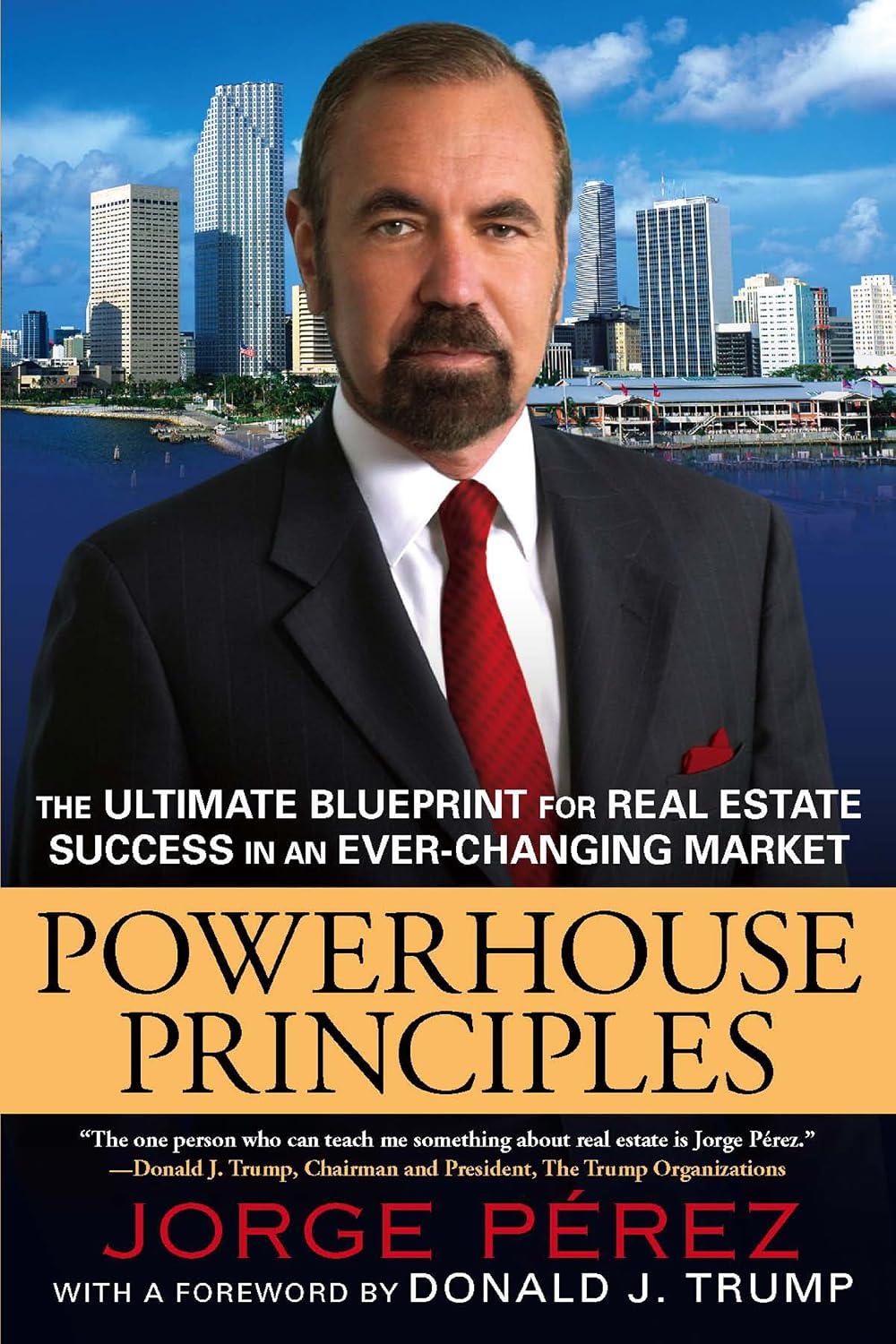
A great book. Jorge Pérez is a Miami legend, and I’m grateful for books like this that let you get inside the mind of a real estate mogul and learn from him. It covers his rise in real estate, from government-subsidized housing all the way up to skyscrapers, and shows how to apply his principles to a deal of any size. He opens by saying that if he can do it, anyone can. An inspiring and informative read.
Highlights
If I can do it, you can, too. I started with nothing.
I was an immigrant kid who came to Miami with $2 in my pocket. Today, I am a billionaire. Believe me, you can do it, too. I did it with real estate. I made $1 million the first year, with no money down.
“Have great focus, set high but achievable goals, and work extremely hard at achieving them.”
I believe that getting rich at anything takes about 25 percent luck, 25 percent brains, and 50 percent hard work.
You have to become an expert in the area that you are going to be functioning in. If you decide to do affordable housing, like I did when I started, you better know all the city programs, all the city financing, all the federal and state programs, all the federal and state financing that is available to you in order to make that project happen.
Thomas Edison, the great inventor, said, “Genius is one percent inspiration and ninety-nine percent perspiration.” I really believe that. But the perspiration and hard work need to be accompanied by credible ideas.
There will be plenty of no's, especially in the beginning. You can’t give up. If you really believe it, you will succeed. You’ve got to find and surround yourself with people who believe it, too.
“Nothing in the world can take the place of Persistence. Talent will not; nothing is more common than unsuccessful men with talent. Genius will not; unrewarded genius is almost a proverb. Education will not; the world is full of educated derelicts. Persistence and determination alone are omnipotent.”
I was an immigrant kid who came here with nothing. My parents lost it all in Cuba.
I had one clear goal: I wanted to be sure that what happened to them would never happen to me. Never. I call it “the Cuba Fear.” It drove me to succeed, to work harder than anyone else, to put money away, to have security for myself and my family. Always.
I learned from reading and seeing what others were doing. I would go and see what the developers were doing and checked how they built their projects. Even though I was a do-gooder planner helping to make the city a better place to live, I was always visualizing opportunities.
My first solo project was the renovation of a twenty-one-unit federally subsidized project. After a couple of those, I moved into market-rate apartment buildings. Then luxury units, then condos, and the rest, as they say.
It’s a matter of taking larger steps as you become more experienced.
I always say you should sell your first project as soon as possible, so you experience success.
PRINCIPLE #1: PASSION Have a love for what you do. The passion for what you do inspires you, drives you, makes you tenacious. Without the vision and the passion you won’t be able to sell your ideas.
I worry all the time. If I’m getting ready to make a presentation to ask a lender for money to build a project, I worry. If I’ve got the construction under way on a new building, I worry. The worry does two things: it makes me extremely competitive, in that I want to make sure that my job will be the best, and it keeps me out of trouble, because I tend to think about all the negatives that can happen. I worry so I can prevent problems before they happen.
“Don’t give me the good news. I can see that. Where are our pitfalls?”
Ask yourself: “Where did we go wrong? What part of the due diligence didn’t we do? I know this site is great, but did we cover everything? Is the title right? Did we really do the market study correctly to know that we can get these prices? Did we really see what the contractor did so that we priced it out correctly?” Don’t leave it for tomorrow. Do it now. That’s part of worrying.
You can’t be overoptimistic. You have to expect things to go wrong. That’s very different, though, from spending your time being negative.
PRINCIPLE #2: DISCIPLINE. Success requires discipline. It requires total focus and attention to details. I do everything with that same kind of intensity, that passion, that discipline.
PRINCIPLE #3: HARD WORK Success takes discipline. And it takes hard work. Those two are inseparable.
The only real defeat is not trying.
I always tell the young developers and the developers who are working for me, “When you think of the customer, put yourself in their shoes. You don’t need to be a rocket scientist. What the hell would you want for yourself? You want the best.”
When I think back on what I know now, the one thing that comes out that the young in all their zeal tend to forget is: build long-lasting relationships with those who matter.
From early on, I understood the importance of relationships. And I knew that if I was going to build good relationships I had to prove I could be depended on.
A lot of people think that the first thing you do after you decide you’re going to go into real estate is find the property. They’re wrong. First you decide what you’re going to do. Then you learn everything about it. Then you go do it.
When I first started, it wasn’t a three-hundred-unit job. It was a subsidized twenty-one-unit renovation in Little Havana, an area I already knew well because back when I was a planner in the city of Miami I had created a lot of its neighborhood programs. I knew a lot, but I still started with a twenty-one-unit job. It would have been crazy for me to start out with five hundred units.
Start small. Pick an achievable goal, then be unwavering in your pursuit of it.
KEY #2: KNOW YOURSELF. As you look at yourself, you have to ask, “What is it that I really like that is going to make me thrive?”
Typically, when you’re looking at investments that are passive you look at an internal rate of return (IRR) in the 15 to 20 percent range. IRRs are used to compare investments that yield returns over a period of time, after an initial cash outlay.
You also have to decide if your goal is to hold a piece of property and manage it, or develop it and sell it. Which is better? It’s up to you. Neither one is wrong.
Learn the difference between the things you can do something about and the things you can’t do anything about.
It’s a simple fact of life: The bigger the deals, the bigger the risks; but the bigger the rewards, as well. So I’m still scared every day, but I can’t let that stop me. You can’t either. The only way to succeed is to take smart chances. You have to take calculated risks. You have to do your research, get advice, and make your plan. Then it’s up to you.
The only way to succeed is to take smart chances. But you can’t just dive in blindly. You take measured risks. I will risk little bits of money before I risk a large amount to find out if I’m right or wrong.
But always remember: Reducing risks is not the same as not taking risks. You take intelligent, measured risks. Fear is really good. Worrying is really good. As long as it makes you a better developer and doesn’t lead you to inaction.
It’s not like a great warrior doesn’t have fear. But he better get a good sword and a great suit of armor, right?
Sooner or later, you have to take a “leap of faith,” as the philosopher Søren Kierkegaard called it. You prepare and plan, learn and get advice; but you can never know for certain. You just have to do it.
Conventional wisdom and moving with the masses is not going to lead you to greatness. In fact, going with the crowd is most likely going to lead you away from opportunities for real success.
If you want to be really successful in real estate, you have to get ahead of the crowd.
But not following the crowd doesn’t mean going against the market. You can’t go against the market.
You have to be very honest with yourself about the resources and skills you don’t have, and which ones you’re not that good at, so you can surround yourself not with people who are the same as you, but who complement your weaknesses.
You make money in real estate by creating value. The more value you can create, the more money you make. Example: A piece of land is only worth so much. Put a house on it and it’s worth more. But if you want to make even more money, go to the city, get the property split into two parcels, and build two houses. The piece of land you started with is now worth a whole lot more. But what if you take the two parcels and get them rezoned for town houses? You build two rows of four, facing each other across a lushly landscaped common courtyard, with small, private gardens in back. Put a fence around the whole thing, with an automatic gate at the entrance. Add some upscale touches in the kitchens and upgrade the bathrooms and you’ve got eight “affordable luxury homes in an exclusive, gated community.” That’s vision. And that’s what you need to really make money in real estate.
Vision allows you to find a special niche. It allows you to find places and ways to make money that others don’t see.
You always want to have a viable exit strategy. What I usually try to do is make real sure that the land I buy is so well priced that if the job is not successful and does not go forward as planned, the land itself will cover my costs.
In addition to location, location, location, there’s another equally important factor in selecting great properties: price, price, price.
There’s only so much oceanfront or bayfront, no matter where you are. Look for a location whose value can’t go down in the long run.
“Always leave money on the table. Building a relationship is more important than making one deal.”
Negotiations are like playing poker. You have to know what cards you’re holding, read the cards your opponent is showing, and try to learn as much as you can about the ones he’s holding without letting him know what you’ve got in your hand. You also have to know as much as you can about him as a player—what his style is, and what his strengths and weaknesses are.
In every negotiation, you have to understand what the conditions are on the other side in order for you to squeeze the most out. You have to know if your opponent is strong or if he’s weak. You need to get into his shoes. The only way to know that is to do your research beforehand and to keep your ears open for clues. People will show you their cards, if you pay attention. What you want to be able to do is get into your opponent’s head. You have to try to figure out what they really want, and why. They may say they want one thing, but in reality they want something totally different.
Ask yourself: What do you bring to the table that they don’t have?
If you’re starting a business and you’re looking for partners and you’re negotiating, well, what you are bringing is your time and expertise. What you bring to the table is the ability to get the deal done and produce a greater profit. They can’t do it without you. That’s what you have to tell them you do.
The power of personality is very important. In my case, I must say, I am foremost a salesman. I have a strong personality. That’s why attorneys want me to go before city councils and want me to speak: because I speak with passion whether I’m negotiating or not.
I tend to go in, and before we do the selling I’m going to sell myself.
I will show them in graphics and videos and photos all the incredible projects we have developed and our relationships with powerful business and government leaders. So I’ve got to get them to believe in me. That’s the personality. And I’ve got to get them to respect me and like me and trust me.
Always go into negotiations knowing what you want to end up with.
My rule is simple: Don’t get enamored with the painting and pay more than what you really think it’s worth—even if you love it. That’s my philosophy.
Lose the skirmishes; win the war.
When you negotiate, the exit strategy needs to be part of the ultimate goal.
Do your research before you go into the first meeting. You have to know your opponent, right? Well, how are you going to know if you haven’t taken the time to find out? Who is this person across the table from you? Is this their first deal or their fiftieth? Do they have twenty offers already or none? You need to know everything you can about the property—what the hidden development costs might be, how it’s zoned. Have they tried to change the zoning before? What kind of opposition did they run into?
Find out what the property means to the sellers. What was their plan for it? When did they get it? From who? What did they pay for it?
Find out everything you can about the people you’re negotiating with. What other deals have they been involved in? How did those turn out? Are they considered honest? Trustworthy? Or is every word out of their mouths a lie that you’ll have to confirm separately? Are they litigious? In short, what is their reputation?
And once you think you know all there is to know about the people at the table, you have to remember that birds of a feather really do flock together. Find out who their associates are. And what their reputation is.
Trust me, if they’re any good at what they’re doing, they’re going to know everything about you.
Generally, I don’t go into a negotiation alone. So before we get to the meeting, my associates and I practice together. We do different role-playing. Who speaks about what and when? Who doesn’t? Let different people on your team handle certain parts.
Typically the way I do it is to play good guy-bad guy. My partner in the negotiations, my vice president or whoever, acts like a good guy in a particular case. And I become the bad guy.
Try never to negotiate with a proxy. You will always have another bite taken from you.
When the other side sends a proxy, I immediately try to get him out of the way and set up a meeting with the real decision makers, or I send my own proxy to negotiate.
In negotiations, time is a tool. Time can also be a weapon.
Never be in such a hurry that you make the first offer. You always want them to. Why? Because the first offer is just that, it’s a starting point. It’s rarely the end.
If you do somehow wind up making the first offer, always leave room to go up.
Don’t let the other side see how much you want a piece of property, or how important it is to you. You’re playing high-stakes poker; you can’t show your cards and you can’t give any tells.
Have time. Don’t be desperate. Desperate people will always end up badly in a negotiation.
Whenever we reach agreements, we act on them very rapidly. We take our time getting there, but once we settle the details, we move fast.
Building a relationship is one of the most important goals of any negotiation. The long-term gain is worth more than any immediate profit you can make.
“It’s always good to work with other people’s money.”
There are basically two sources of money: investors and lenders. The biggest difference between the two is that, generally, investors only expect to be repaid if the project makes a profit. Lenders want their money, plus interest, no matter what.
Seller financing. That means the seller is going to act like a bank and extend you part of the cash you need for the purchase, and you’ll pay back the loan—usually with interest. Or I might convince a landowner that instead of selling the land for $500,000, if he would sit in with me, not only is he going to get the $500,000 for the land, but I’m going to give him 30 or 40 percent of my profit. And if my profits are $1 million, say, he’s going to make another $400,000. And he never risks his land because the payment for the land comes out first, before anybody even takes a profit. Or maybe the seller doesn’t want to do that. I might go to a private person who has money sitting in a bank making 5 percent, and tell him I have a way to make 30 percent with that money. And to make him feel more comfortable about the risk, I might assure him that I’m going to give him his investment back and his profit before I take a single penny for myself.
You can also go to friends and family. “Hey, I don’t have the money. Can you put up most of it? Here’s what I’m going to do, I’m going to do the sweat equity. I found the deal. And I’m going to be in charge of renting it and increasing the rents and then, later, selling it for a big profit.” You can ask for a loan, and pay him interest just like you would to a bank. Or you might convince him to become an investor. If he likes your plan enough, he might see an opportunity he wants to take part in.
The best deals are obtained through relationships. That’s why you need the mortgage broker. He already has the relationship.
It’s very good sometimes to have somebody else describe you and do the selling for you.
Always put some of your own money in to show that this is much more important to you than it is to them.
When I’m dealing with lenders, the money I’m talking about is equity. That can be the value of the land, the value of the completed building, and a whole lot of other things.
The final option to look for is mezzanine financing. Mezzanine financing is the financing that comes after your first mortgage. So first you go with a lender who gives you a loan at 6 percent and covers 80 percent of the job. Then you go to other types of lenders and you say, “I don’t want to put the other twenty percent down. I want you to give me some money that has a second position to the primary loan.” You might know it as a second mortgage. In development we call it mezzanine financing.
The lender presentation 1. One-paragraph description of the project 2. Single-page pro forma 3. Rendering or photo 4. Detailed pro forma 5. Market analysis (macro and micro), with comparison
Remember this: If you don’t believe, you’re not going to be great in your presentations.
The number-one thing in securing a loan is to have a good product. Number two is to have a great presentation. Number three is to have relationships. Even with all of those, you have to have the passion and the salesmanship.
Never, never, never get a loan, cut communication with the guy, and go until the end and just pay the money back.
Communicate with them regularly. Keep them informed about what’s going on with your project. Get them involved. Take them on site visits so they can see how the progress is going. If you have bad news, call them up immediately and have solutions to the problem when you tell them about the problem.
I’m a developer, yes, but the reason I’ve been so successful is because I’m a good salesman.
If you’re going to go into business, you better be ready to be a salesman. Because if you can’t get other people to buy into whatever it is you’re selling—your concept, your image, your program—you’re not going to be successful.
People buy from people. So the messenger has to be just as important as the message.
But it won’t do any good at all to try to sell an opera ticket to a rodeo lover.
I always tell my salespeople, understand the client. If the person comes here and says, “It’s me and my child and I want a two-bedroom apartment,” please, do me a favor, don’t show them the three-bedroom units.
Generally speaking, our projects take on an unorthodox method of marketing. This comes from a realization that in a real estate market, particularly one that offers a lot of choices to the consumer, something must set you apart from the competition. And you can’t stop there. You can’t be like a tree falling in the forest. If no one hears you, you’re dead. Not only must you be unique, but you must also know how to hammer that message home effectively. It’s even more important in a tough market,
When the market gets like that your voice has to be better, louder, and clearer.
Before we start selling a project, I take all the salespeople to lunch one or two times so I can instill in them not how to sell—they know how to do that—but the knowledge of the project and why I am so passionate about it. I’ll talk to them about the location. I’ll talk to them about why our product is so much better than the rest. I’ll talk to them about all the specifics, not just the cold facts, but in a very emotional way, because you want them to start feeling that sense of excitement and passion to participate in your vision.
It’s up to you to create the spark, build them to having an interest, then having a desire, having a want, and, finally, having a pressing need.
Where’s the spark come from? Your product. You create a one-of-a -kind opportunity that they can’t miss and they’ve got to have.
They have to believe this is a unique opportunity for them to get something they must have, and if they don’t grab it now they won’t have another chance.
you have to: 1. Create unique opportunity. 2. Create a sense of privilege. 3. Create credibility. 4. Create perception of value that exceeds price. 5. Create fear of loss.
I sell dreams.
What a salesman does is, he gets that dream and transports it into your mind so you become a dreamer with him, too.
When we’re creating the spark, we reach out to brokers we’ve worked with before and “leak” the word to them that we’re starting another project. I want them to feel special—and they are; they get the word before anyone else. They’re the ones in the know. So they can start reaching out to their clients and tell them that they’re among the first to know. That way, their clients feel special, too. They feel—and here’s one of the emotional hooks Playground talks about—a “sense of privilege. ” They are VIPs, important enough to be given this—here’s another one—“unique opportunity” ahead of everyone else.
as any fisherman can tell you, just because you have them on the hook doesn’t mean you’ve reeled them in.
Highlight whatever it is about your product that’s unique, and that your research told you people wanted more than anything. And let them know, if they don’t act right now, it will be gone.
“Every building we have is our best marketing tool.”
I do it for two reasons: One, I do it on principle. I cannot be associated with something that’s a failure. That is run-down. That is mediocre. I just won’t. I will not be associated with it. You talk about building self-esteem and pride when you’re starting out—unless it’s a fake self-esteem and pride you need to make sure that everything you have and you own is top quality. That’s number one.
Don’t give your customer any less than what you would expect for yourself. Don’t give them any less than your expectations. Now, unfortunately, I’ve had some guys who have some very low expectations and I’ve had to get rid of them.
The difference between good and great lies in the details.
You can’t settle for less. You need to insist that things are done right.
Settling is something that we won’t do. It has to be the best in every detail. It’s more than pride. Every building we have is our best marketing tool.
DON’T BE PENNY WISE AND POUND FOOLISH “Penny wise and pound foolish” is an old saying that basically means you’re so busy saving on the little things that you end up costing yourself more in the long run.
The best plans in the world won’t be worth the paper they’re printed on if you have a bad contractor.
you have to check out your contractor to make sure they are licensed and are bonded and haven’t been sued a bunch of times or have a bunch of liens on their former clients’ properties. You have to check their track record, visit their job sites, and ask their past clients.
But much more than that, you should do what I did at the beginning: I would go to the job sites they were doing and take a look at their work firsthand. I wanted to see how clean their job sites were, and if they were delivering on time. I would talk to the owner who hired them to see if they had any complaints, if they were honest, if they were change-order artists—the kind that give you a price and then change-order you to death, adding on charges here and there for things that “need” to be changed on the job. That was all part of my due diligence.
When I was considering a contractor for a job, the first thing I would ask for is a list of projects they were doing or had done.
When I’m hiring contractors, I don’t ask them for their references. I talk to them and ask questions, like, “Who did you work for? And who did you report to on that particular job? And who owns that company?” And then I will do my own reference checking, apart from the ones he has given me.
We are immense believers in market research. Immense believers. And in being great imitators. We have no qualms about imitating what we think is great.
So you use words. For example: “Garden tubs.” Those were the same tubs, we just made them a little bigger. “Decorator carpeting.” We asked our decorator to pick three colors of the same carpet. So the words you use become extremely important to the marketing of your product.
ONE BIG CHANGE CAN BE WORTH MORE THAN TWO HUNDRED LITTLE ONES
So from the very beginning, I had to surround myself with people I could trust and hand things off to. I needed them to take care of a lot of the chores that need to be done so I could focus on finding and negotiating deals, on applying my vision to create great projects, to do many of the things we’ve already talked about. Without those people, I would have been so consumed by details that I would’ve never been able to grow.
Hire tough and manage easy.
The hiring of people and driving them to be the best they can be is extremely important.
People become very, very important for the whole success of the organization. I want my people to go out and really use their creativity. I want them to bring me deals—to look at a piece of property and say, “This one is perfect for
Never lose sight of your long-term goals when you’re making short-term decisions.
Play out scenarios of what could happen and figure out how you’ll react to them.
There comes a time when you ask yourself, What’s important? What’s important in what I’m leaving behind? How are my children going to remember me? Are they going to say, “Oh, wow, we had a rich dad.” Or are they going to go around and look at the buildings and say, “Whoa! This guy really did a lot of cool things for his time.” I think that’s what’s important.
The world is about change. Constant change.
If you plan for your company to be around that long, you’re going to have to be extremely alert and extremely agile.
I tell my people all the time, “The minute we stop changing as a company, we die.”
You know that old saying, “If it’s not broke don’t fix it”? That’s nonsense. We are always fixing and fixing and fixing. I need to reinvent that wheel every time. I fear complacency.
Fear complacency.
To my people, I call it re-creating ourselves.
Things change, but the basics remain the same.