- Rating
- —/10
- Read
- October 1, 2012
- Why I read it
- What I took from it
- My favorite idea
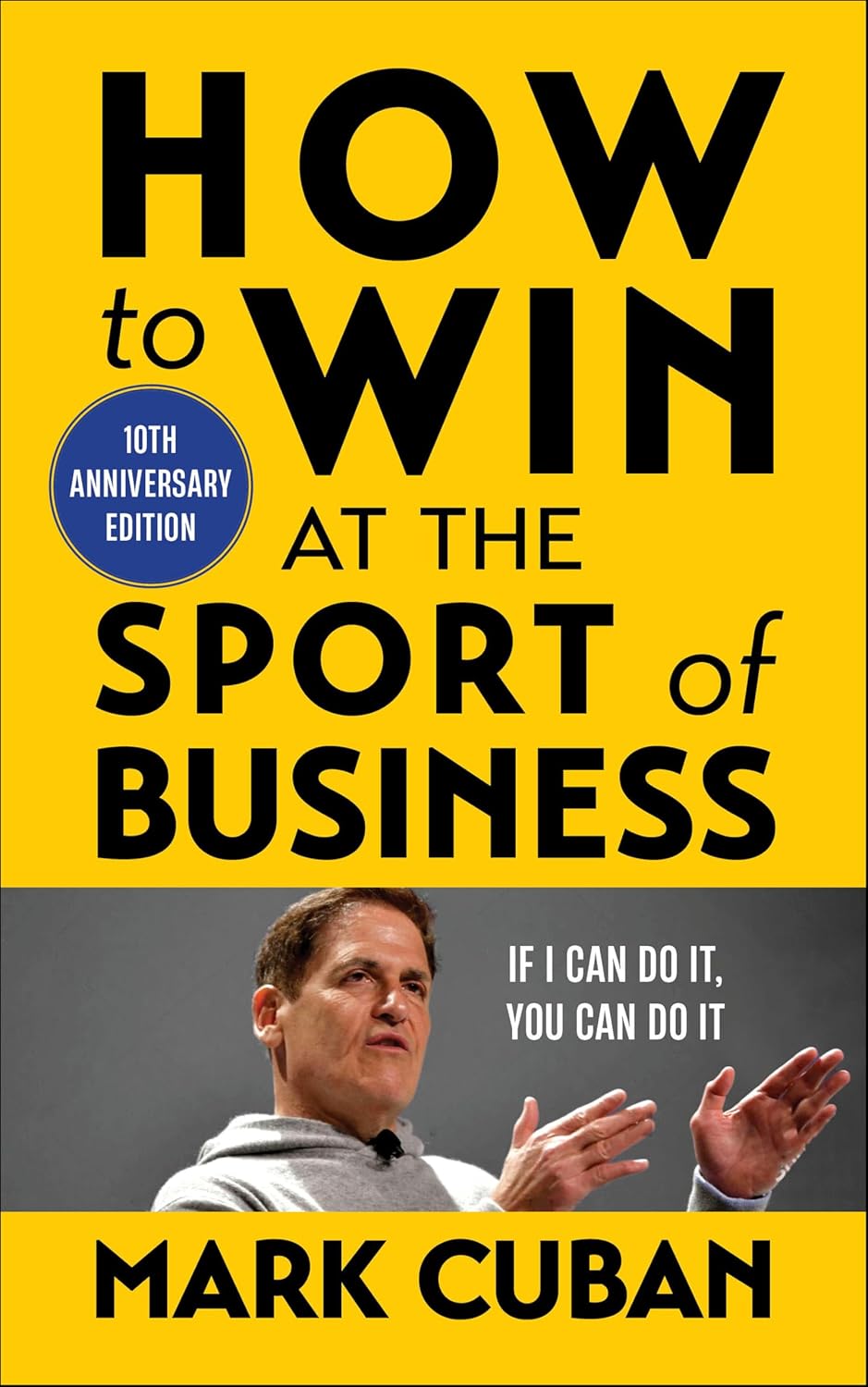
This book is a quick and easy read drawn from Mark Cuban’s blog posts. It’s full of stories and no-nonsense, timeless wisdom from his experiences starting MicroSolutions, selling Broadcast.com to Yahoo, buying the Dallas Mavericks and becoming a billionaire.
Highlights
I did it too. I would drive by big houses and wonder who lived there—every weekend I would do it. What did they do for a living? How did they make their money? Someday, I would tell myself, I would live in a house like that. I read books about successful people. In fact, I read every book or magazine I could get my hands on. I would tell myself that one good idea would pay for the book and could make the difference between me making it or not. (And hopefully this book will make the difference for you!)
I wanted a name that said what the company was going to do,
Architectural Lighting was looking for a time and billing accounting system to allow them to track their work with clients. I don’t remember the name of the software package I told them about (I think it was Peachtree Accounting), but after going out to meet with them it came down to this: I offered to refund 100 percent of their money if the software didn’t work for them, and I wouldn’t charge them for my time for installing and helping them. In return, they would put up the five hundred bucks it would take for me to buy the software from the publisher, and I could use them as a reference. This was my “no money down” approach to start a business. They said yes. I had a business. My second
I learned from magazines and books, but I also learned from watching what some of the up-and-coming technology companies of the day were doing.
I sold some Microsoft products so I could get in.
Lesson #1: Always ask yourself how someone could preempt your products or service. How can they put you out of business? Is it price? Is it service? Is it ease of use? No product is perfect and if there are good competitors in your market, they will figure out how to abuse you. It’s always better if you are honest with yourself and anticipate where the problems will come from.
Watching the best taught me how to run my businesses. Along the way I taught myself a few things.
I love to compete. I always have.
Relaxing is for the other guy. I may be sitting in front of the TV, but I’m not watching it unless I think there is something I can learn from it. I’m thinking about things I can use in my business and the TV is just there.
I spend time in bookstores because one idea from a book or magazine can make me money.
I’m not going to go to dinner with you just to chat. I’m not going to give you a call to see how you are. Unless you want to talk business.
That’s what success is all about. It’s about the edge.
The edge is getting so jazzed about what you do, you just spent 24 hours straight working on a project and you thought only a couple of hours had passed.
The edge is knowing that you have to be the smartest guy in the room when you have your meeting and you are going to put in the effort to learn whatever you need to learn to get there.
The edge is knowing how to blow off steam a couple times a week, just so you can refocus on business.
Every day some stranger somewhere in the world is trying to come up with a way to put you out of business.
off. If we were going to grow, it was going to take working hard and working smart.
The only thing any entrepreneur, salesperson or anyone in any position can control is their effort.
It meant making sure that every hour of the day that I could contact a customer was selling time, and when customers were sleeping, I was doing things that prepared me to make more sales and to make my company better.
What did I need to do to find an edge? Where does that edge come from, and how was I going to get there?
The one requirement for success in our business lives is effort. Either you make the commitment to get results or you don’t.
I’ve learned to hire people in whom I can build trust, and let them take the ball and run with it.
We tend to be less than honest with ourselves about our strengths and weaknesses.
Rule #1: Sweat equity is the best startup capital
The best businesses in recent entrepreneurial history are those that began with little or no money.
tens of thousands of others started in dorm rooms, tiny offices or garages.
Each inquiry cost me next to nothing to get great feedback.
they all served as sales calls. Each company eventually became a customer of ours.
There are only two reasonable sources of capital for startup entrepreneurs: your own pocket and your customers’ pockets. I personally would never even take money from a family member.
Businesses don’t have to start big.
I started MicroSolutions by getting an advance of $500 from my first customer.
The business didn’t grow quickly in the first couple years—just up to four people, and we all worked dirt cheap.
The reality is that for most businesses, they don’t need more cash, they need more brains.
When I’m 90, will I smile when I think back, or will I frown and regret not having done it?
Because they do.” “You have to re-earn your customers business every day.”
“You Always Have Other Options.”
Which describes exactly how people make most of
their choices in life. They take the easy way.
Moral of the story: Make your product easier to buy than your competition, or you will find your customers buying from them, not you.
When I was growing up I was told over and over again, if you can sell, you can always get a job.
The best salespeople are the ones who put themselves in their customer’s shoes and provide a solution that makes the customer happy.
The best salesperson is the one the customer trusts and never has to question.
The best salesperson is the one who knows that with every cold call made, he is closer to helping someone.
The best salesperson is the one who takes immense satisfaction from the satisfaction her customer gets.
If I am selling any of these to someone and they say no, I will always ask for their objections with something like, “Thank you for taking the time to listen/read. Would you mind
sharing with me what you didn’t like about the product or why you like the product you chose?”
3. It’s a sign of fear and laziness. It takes work to find qualified prospects.
A smart, focused and successful salesperson will gear up and do the homework necessary to find their next customer. That is a sign of confidence.
The cheaper you can live, the greater your options. Remember that.
Creating opportunities means looking where others are not.
“The best way to predict the future is to invent it.”
Don’t start a company unless it’s an obsession and something you love.
4. Sales Cure All. Know how your company will make money and how you will actually make sales.
Time is more valuable than money