- Rating
- —/10
- Read
- June 2025
- Why I read it
- What I took from it
- My favorite idea
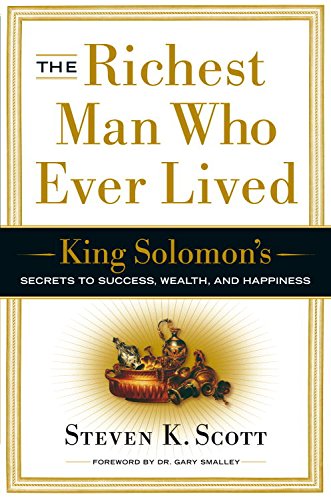
Timeless wisdom from the book of Proverbs. In his day, King Solomon was the richest man in the world, and Steven Scott shares his understanding of Proverbs and shows how to apply its teachings to your life and business. Just about every self-improvement book I’ve read echoes what’s in Proverbs.
Highlights
If I need to cut down a tree and try to cut it down with a hammer, that would be hard-working, but it certainly would not be diligent. It could take me hours, even days, to chop down a tree with a hammer. On the other hand, if I use a chain saw I might cut that same tree down in minutes.
DILIGENCE is a learnable skill that combines: creative persistence, a smart-working effort rightly planned and rightly performed in a timely, efficient, and effective manner to attain a result that is pure and of the highest quality of excellence.
It is human nature to follow the path of least resistance. Solomon understood that we need to be motivated to choose diligence over our natural inclination to “go with the flow.”
“The plans of the diligent lead surely to advantage” (Proverbs 21:5).
“The hand of the diligent will rule, but the slack hand will be put to forced labor” (Proverbs 12:24).
Our greatest motivations in life are the desire for gain and the fear of loss.
“The hand of the diligent will rule, but the slack hand will be put to forced labor” (Proverbs 12:24).
“The soul of the sluggard craves, but he gets nothing.” Sadly, for those who lack diligence, their lives are defined by desire rather than fulfillment.
there’s one giant roadblock. It’s a roadblock that we will encounter nearly every day. I’m speaking of our inherent tendency to take the path of least resistance, our innate laziness.
There are four root causes of laziness, according to Solomon: self-centeredness, conceit (arrogance), ignorance, and irresponsibility.
We naturally see things first from our own point of view. If we don’t choose to shift our focus to the interests and well-being of others, we will simply act in a manner that is most quickly gratifying to our ego and desires.
Those who are truly diligent seek out the advice of several wise counselors before embarking on any important course of action.
The sluggard will not plow by reason of the cold; therefore shall he beg in harvest, and have nothing. —Proverbs 20:4
Step #1—Wake Up to Reality
We think that we have more time than we really do to achieve our personal and professional goals. So we procrastinate doing what we know we should
Step #2—Define Your Visions
Solomon wrote in Proverbs 28:19, “Without a vision, the people perish.”
Defining a vision is an essential component of diligence. In fact, it’s impossible to be truly diligent if you don’t have a clear vision of what you want to achieve.
Step #3—Effectively Partner Plans fail for lack of counsel, but with many advisers they succeed. —Proverbs 15:22
Step #4—Pursue Wisdom; Build Your Life Upon It
Solomon’s power source is vision, and his fuel is hope.
To Solomon, vision and hope are both tangible and precise.
For him, gaining a true vision was more like using a highway atlas. It means having a perfectly clear picture of an ultimate destination, and a detailed road map to get there.
A VISION is a precise, clearly defined goal with a detailed plan and timetable for achieving that goal.
HOPE is a well-founded and confident belief that a specific vision (goal, desire, or promise) will be achieved or fulfilled within a specified amount of time.
“Pleasant words are as an honeycomb, sweet to the soul, and health to the bones.”
Words of praise, appreciation, encouragement, and understanding can penetrate one’s mind and heal one’s very soul.
Your communication can infuse life into a person’s spirit.
Persuasion, on the other hand, allows you to present your point of view in a clear and compelling way to motivate someone to do what you believe to be in their best interest or for the common good.
Once words leave our lips, they can never be retracted. Solomon, more than anyone, knew the incredible power that words can carry.
Solomon warns that when you keep talking after you’ve made your point, you’re likely to say something foolish.
Make your point briefly, and then be silent. As Proverbs 17:28 states, even a fool is considered wise when he keeps silent.
We had both gained a clear and precise vision of what we wanted to achieve, we had both found terrific mentors and partners, and we both had learned how to effectively and persuasively communicate.
Poverty and shame shall be to him that refuses instruction. —Proverbs 13:18
According to Solomon, by recruiting and effectively utilizing a number of counselors or partners in important endeavors, you will achieve your goals in life.
It’s impossible to overestimate the power of effective counsel and partnering.
Solomon claims that if we truly want to be sure we’re making the best decision possible on an important issue or concern, we need many counselors.
He that walks with wise men shall be wise. . . . —Proverbs 13:20
Solomon states what should be obvious to all and yet seems to be missed by most—that with a good partner there will always be someone to come to your aid and pick you up.
Solomon assures us that whatever success you might achieve by yourself, with the right partner you’ll achieve a level of success that is wildly better!
rationalize or excuse their own dishonesty, people for whom dishonest behavior is the rule rather than the exception.
Integrity should be the most important trait we look for when choosing a partner, a mate, or a counselor.
anger is the single most destructive force in a relationship.
Solomon distrusted big talkers, people who talk a lot and perform little. He had an even greater problem with liars, gossips, “flatterers,” and people who reveal other people’s secrets.
When specifically looking for counselors and advisers, examine their “walk” before you listen to their talk.
Assess your own strengths and weaknesses. What you usually don’t need is a partner who is a carbon copy of yourself.
look for a person who shares the same vision you have for your dreams, goals, project, or venture.
Is your potential partner a positive person or not?
One of the most important types of partners we can recruit is a mentor. A mentor is someone who has already achieved extraordinary success in the area in which we want to achieve success, whether personal or professional.
being truly happy produces wonderful health benefits.
people who are unhappy or depressed experience a higher rate of inflammation in the circulatory system,
Overall, depressed people have about twice the death rate per age category as people who are happy (that statistic does not include suicides).
Solomon suggests that no matter what reasons you have to be ungrateful, there are even more and better reasons to be grateful.
It’s impossible to be grateful and unhappy at the same moment in time.
Let your unhappiness serve as an alarm to redirect your focus and energy.
Make a list of all the things that you should be grateful for. Then, every time you notice unhappiness creeping into your thoughts, redirect your focus to those wonderful gifts.
It is impossible to be happy and envious at the same time.
Why? Envy takes your eyes off what you have and focuses your attention on what you don’t have.
We cannot prevent envious thoughts from entering our hearts, but we can keep them from taking root. And the antidote is gratefulness.
Solomon said in Proverbs 28:26, “He that trusts in his own heart is a fool.” Why? Because our feelings are not only unreliable, they can change in a moment.
Wisdom is not simply knowledge—knowing
Wisdom involves action. Simply stated, wisdom is the effective application of truth to your daily behavior.
In Proverbs 3:3–4, Solomon says, “Do not let kindness and truth leave you;
When others think of us, the first thought that should come to their mind is our kindness and our integrity.
make them the central part of who you are and what you are about.
Kindness,
forces us to set aside our personal needs and desires long enough to focus our attention on the genuine needs of others.
Every day we face countless opportunities to choose between our own self-interests and kindness.
Solomon promises that those who are generous will never lack for anything—every
the first step to becoming gracious is to choose to become grateful.
according to Solomon, conflict and adversity serve very important purposes in our lives that are rarely accomplished by any other means. If you deal with them correctly, they will produce positive outcomes and strengthen your relationships at work and at home. If you don’t handle them correctly, they will produce negative outcomes and harm your potential for happiness and success.
adversity may ultimately spawn not just challenges but opportunities.
In Proverbs 27:17, Solomon says, “Iron sharpens iron, So one man sharpens another.”
People who run away from conflict and avoid confrontation at all costs can unintentionally do more harm in their relationships than good.
Conflict should be seen not as a dreaded enemy, but as a necessary tool for optimum achievement in any walk of life.
Our notions of winning an argument are often simply to get the other person to agree with us and to get them to do what we want.
But in reality, both sides lost. To truly win in any situation is to achieve the best possible outcome.
Winning becomes no longer a matter of getting “my way,” or persuading someone to do what I want them to do; rather, it becomes a way of achieving what’s best for all.
Whenever we engage in an argument, whether we initiate it or are responding to the person who did, our natural inclination is to defend ourselves and our point of view, and to attack or counterattack the other person and their point of view.
Solomon says that this is foolishness.
Instead of simply defending or attacking, we should shift our focus to achieving the best possible outcome for both parties.
Proverbs 15:1 says, “Soft words turn away wrath, but grievous words stir up anger.”
Solomon suggests that we take control of our mouth and use kind and gentle words to reduce tension, rather than harsh words to stir it up.
Realize that adversity is a valuable part of life. Adversity provides us with the opportunity to develop our character in a natural, recurring, and powerful way that only the challenges of adversity offer. According to Proverbs 17:3, only adversity refines and reveals the gold and silver of our character.
Seek insights from other people. A lot of times, adversity blindsides us. So what do you do? This is exactly the kind of situation in which Solomon would advise us to seek outside counsel. Go to others and gather their insights. What went wrong? Why didn’t I see it coming? Was I blind? Was I callous? Was I naive? Others can sometimes see what we cannot because of our closeness to the situation.
So Solomon is telling us that the person who can’t take constructive criticism is severely hurting himself.
Poverty and shame. In Proverbs 13:18, Solomon warns, “Poverty and shame [will come] to him who neglects discipline, But he who regards reproof will be honored.”
Stupidity. Solomon sums up the consequences of refusing criticism with a single word in Proverbs 12:1—“He who hates reproof is stupid.”
Consider the source. Is the person offering criticism qualified by their own knowledge and experience to make the judgment they have rendered? Is their perspective complete and accurate, or incomplete and distorted?
In every bucket of criticism that’s thrown at us, there is always a little gold. It may be the tiniest of flakes, or it may be a giant nugget.
Proverbs 14:17, “A quick-tempered man acts foolishly.”
Anger lowers our self-esteem and the self-esteem of others. Solomon says, “He that is soon angry deals foolishly.”
You will have greater understanding. As Solomon says, “He who is slow to anger has great understanding, but he who is quick-tempered exalts folly.” Because your perception is neither blurred nor blinded by anger, your understanding of the realities of a situation increases.
The Root Causes of Anger According to Dr. Gary Smalley, anger is not a primary emotion. It’s a secondary emotion caused by unresolved hurt, frustration, fear, or a combination of these.
Dealing with the Anger of Others
Don’t add fuel to the fire. Solomon writes, “For lack of wood, the fire goes out.”
We can remove fuel from the fire by accepting responsibility (or the other person’s blame) for the things we did or said that were hurtful, rather than simply excusing or defending our words or behavior.
Presumption. In Proverbs 27:1, Solomon warns, “Do not boast about tomorrow for you do not know what a day may bring forth.” Solomon is talking about the attitude and behavior of presumption. We presume that the same conditions and opportunities that are in front of us today will remain available to us in the future—tomorrow, next week, or next year. We naively act on impulse, presuming that we’ll have tomorrow to correct any mistakes we make today.
Haste. When we are in a hurry to make a decision, we will usually make it without taking enough time to look into the matter thoroughly.
Proverbs 21:5, Solomon warns, “But everyone who is hasty comes surely to poverty.”
Arrogance. One of the greatest sources of naivete is arrogance. Arrogant people often think they’re smarter than everyone else. They don’t feel they need to seek outside counsel or perform due diligence—they already know what they need to know. Solomon said, “Pride goes before destruction, and an arrogant spirit before a fall.”
In Proverbs 14:18, Solomon tells us, “The simple inherit folly, but the prudent are crowned with knowledge.” In other words, only those who look well into matters before they make important choices will be rewarded.
Choose Your Friends and Associates Wisely. In Proverbs 13:20, Solomon writes, “He that walks with wise men shall become wise. But a companion of fools shall be destroyed.”
Focus on achievement rather than money.
In Proverbs 14:23, Solomon wrote, “In all labor there is profit. But mere talk leads only to poverty.”
KNOWLEDGE: The acquiring of information. UNDERSTANDING: Discerning and valuing important and practical truths. WISDOM: The act of applying valued truths to any given situation and to life in general.
Understanding Why You Act the Way You Do.
As Solomon says in Proverbs 14:8, “The wisdom of the prudent is to understand his ways.” As you begin to more clearly understand your behavior and natural inclinations, you will begin to make the best choices rather than those to which you’re naturally inclined.